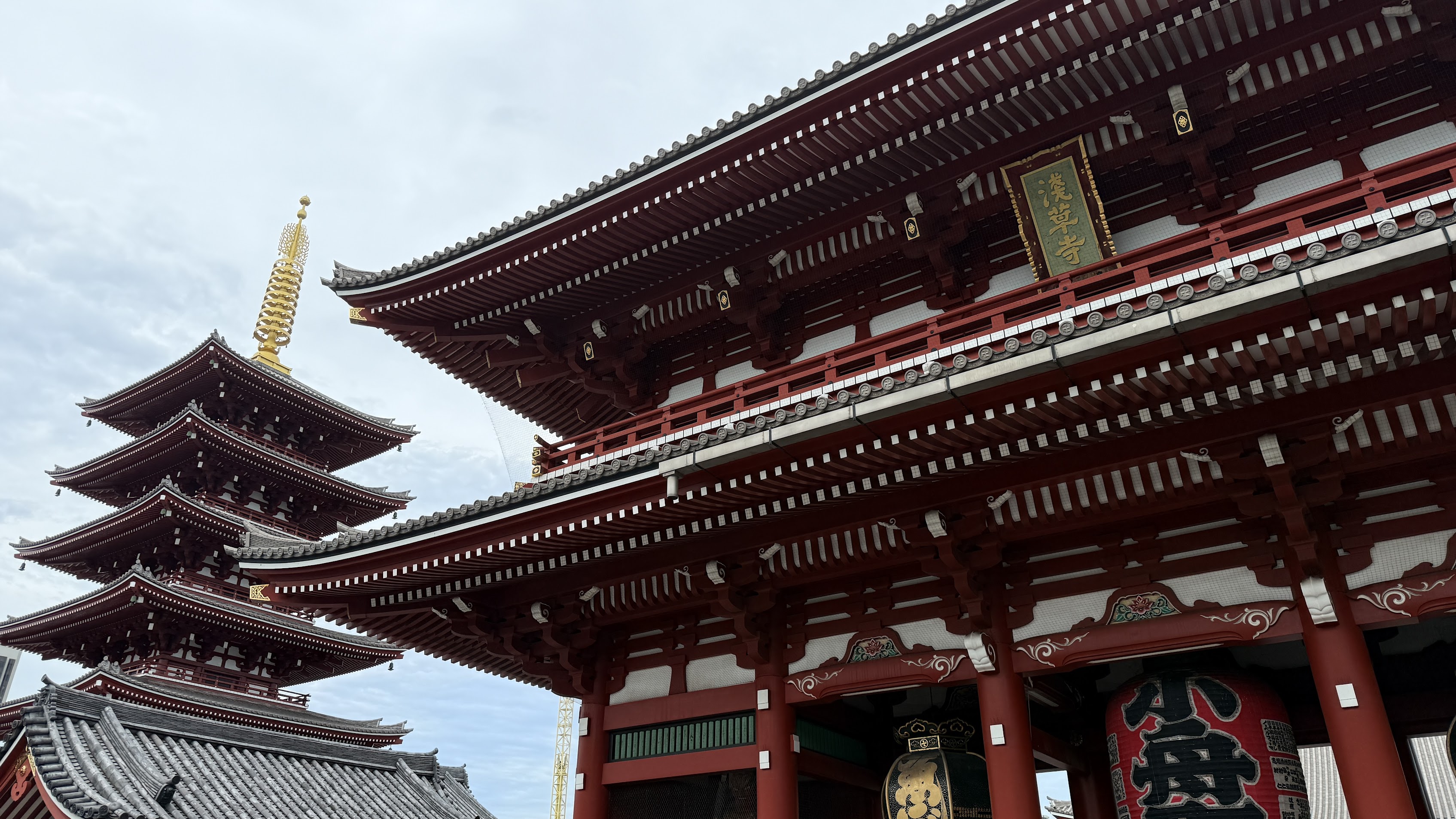
There is a word in Japanese—shitamachi—that has no clean English equivalent. It means “low city,” but it carries a weight of meaning that goes far beyond geography. Shitamachi is a way of being: unpretentious, warm, communal, built on the shoulders of artisans and merchants who sweated under Edo’s summer sky. Asakusa is the last living shitamachi in Tokyo.
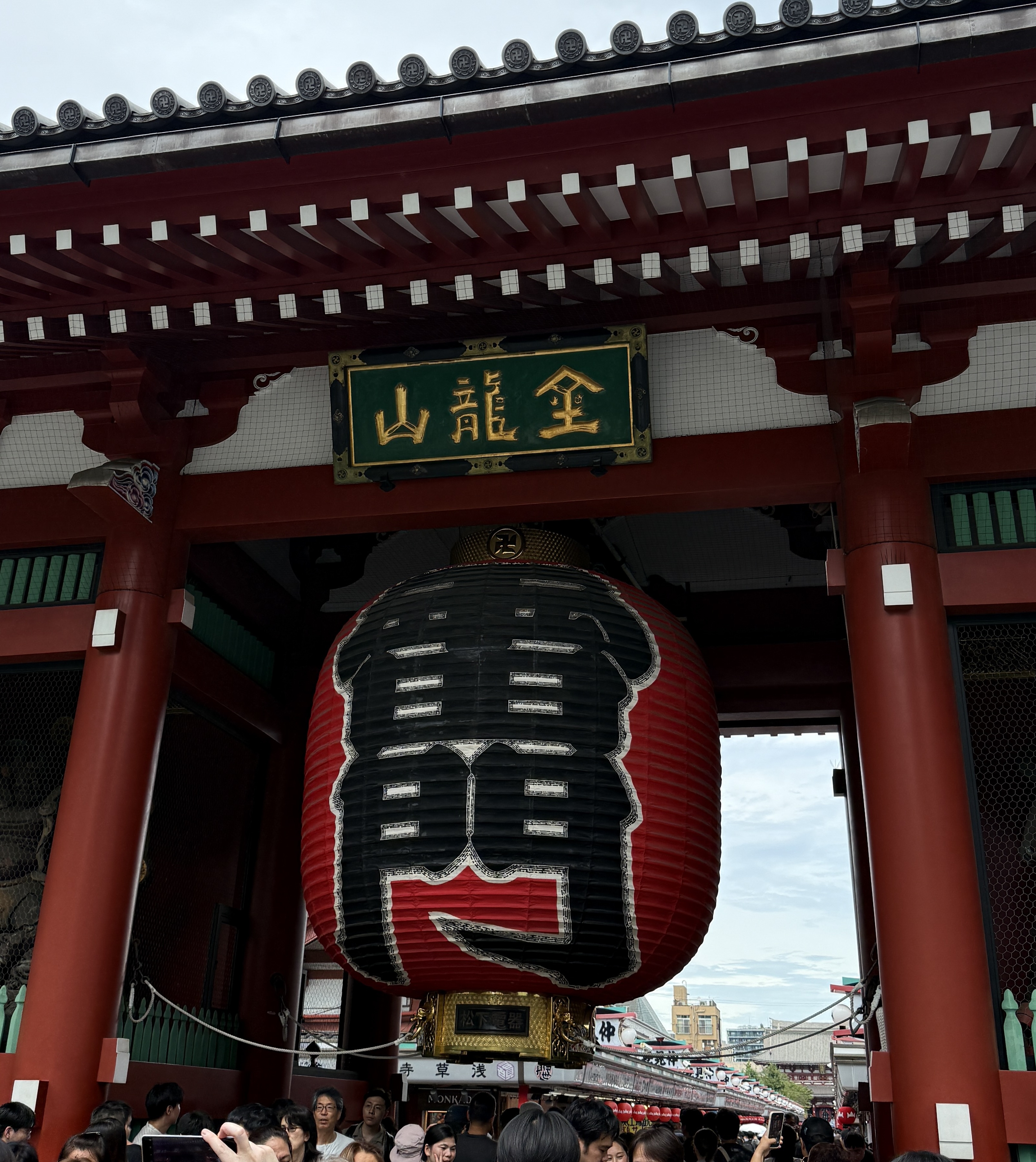
When I walk through Kaminarimon at 7 AM, before the tour groups arrive, I am not doing it for the Instagram shot. I am doing it because at that hour, the old men are already there—performing the same morning ritual they have performed for sixty years. One of them once told me something I haven’t forgotten: “Senso-ji doesn’t belong to tourists. It doesn’t even belong to us. We just take care of it for the gods.”
That sentence is the key to understanding Asakusa.
Why Asakusa Is Different from Every Other Tokyo Neighborhood
Tokyo reinvents itself ruthlessly. Neighborhoods that meant something twenty years ago—Daikanyama’s boutiques, Roppongi’s glamour—are constantly overwritten by the next version of the city. Asakusa has resisted this. Not because it is frozen in time, but because it is held in place by something deeper: ikigai rooted in craft and community.
The families who run the sembei shops on Nakamise-dori are the fourth, fifth, sixth generation doing the same work. The rickshaw pullers (shafu) know every alley and the story behind every stone. This continuity is increasingly rare in Japan, let alone in the world—and it is the real reason to come here.
Senso-ji Temple: Reading the Space, Not Just Seeing It
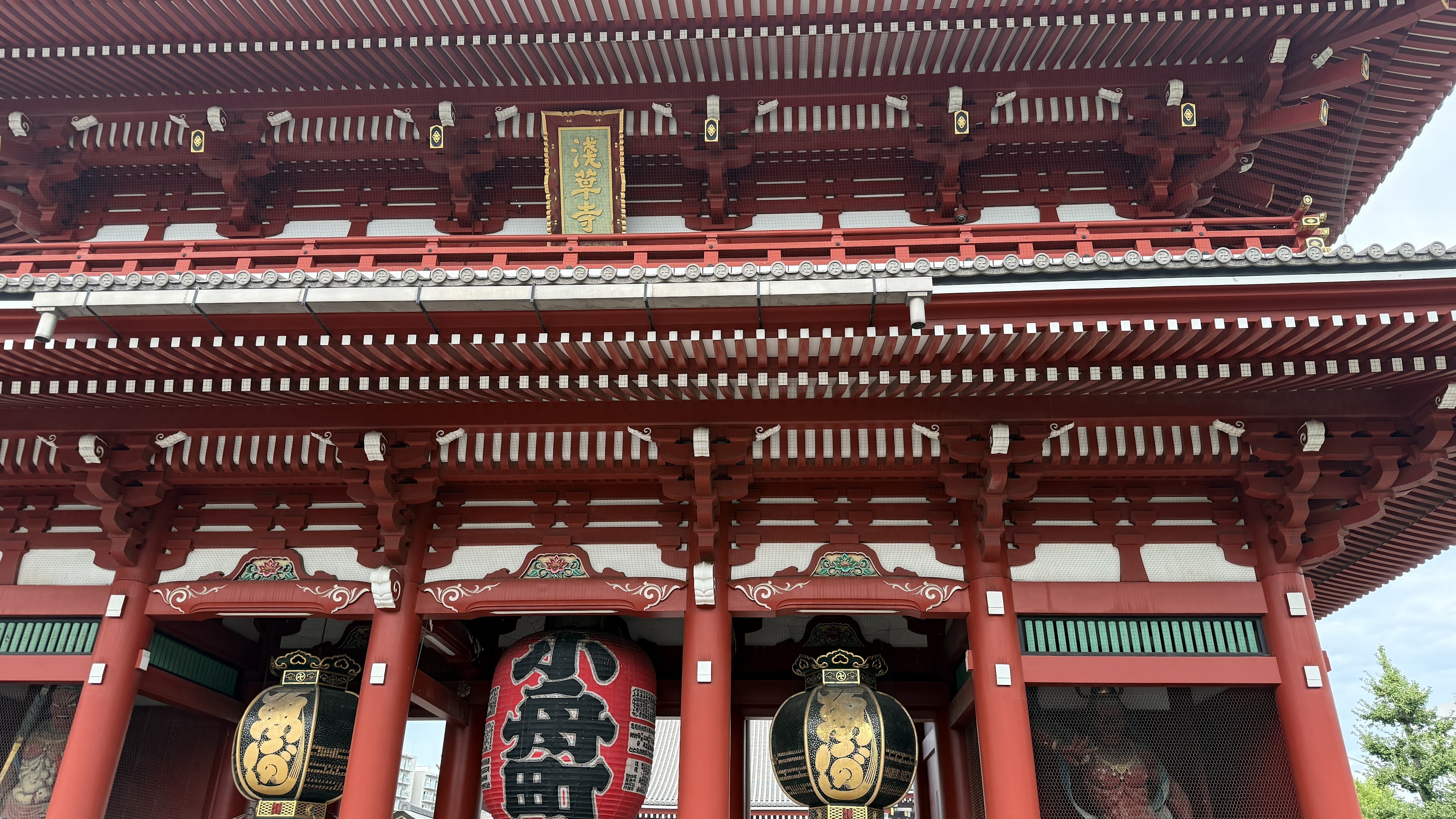
Senso-ji (浅草寺), founded in 628 AD, is Tokyo’s oldest temple. Most visitors photograph the Kaminarimon gate and the giant lantern, then walk straight to the main hall. That is fine. But if you want to feel something here, slow down.
What to Notice Under the Kaminarimon
Look up at the bottom of the great red lantern. There, hidden from the distracted eye, is an intricately carved dragon in mid-flight. It faces downward—toward us. In Buddhist iconography, this posture represents the dragon as a protector of the human world, not a threat to it. Nobody points this out on the standard tour. Now you know.
Nakamise-dori: The Architecture of Approach
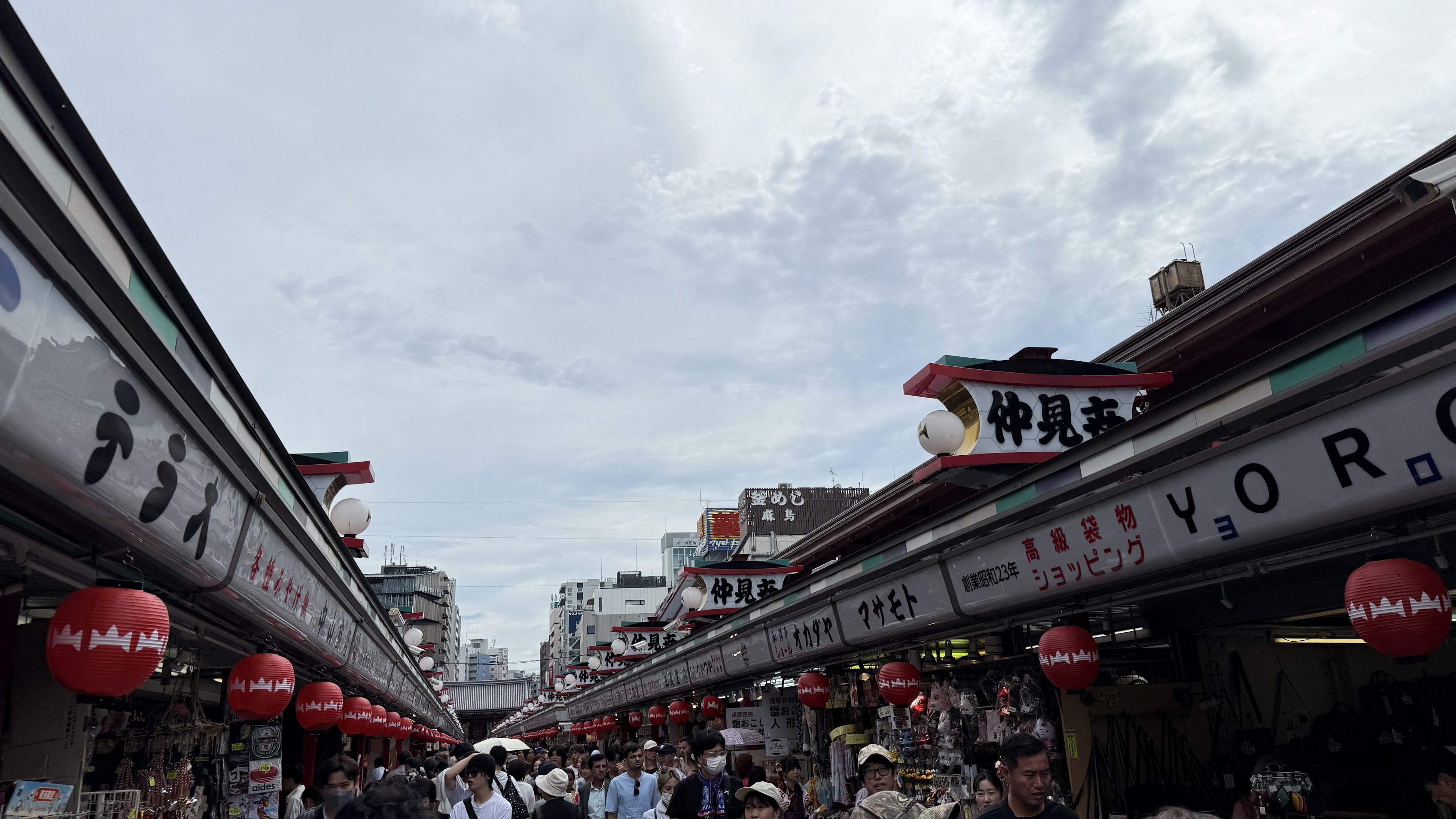
The 250-meter shopping lane leading to the temple is not incidental decoration. In Japanese temple culture, the sando (approach path) is designed to gradually shift your consciousness. The noise and commerce of Nakamise are meant to be left behind as you cross the second gate. The shops sell distraction so you can release it.
This is why traditional Japanese design is so obsessed with thresholds—the moment of crossing from one state to another. Notice how your breathing changes as you pass through each successive gate.
Omikuji: Japan’s Relationship with Bad Luck
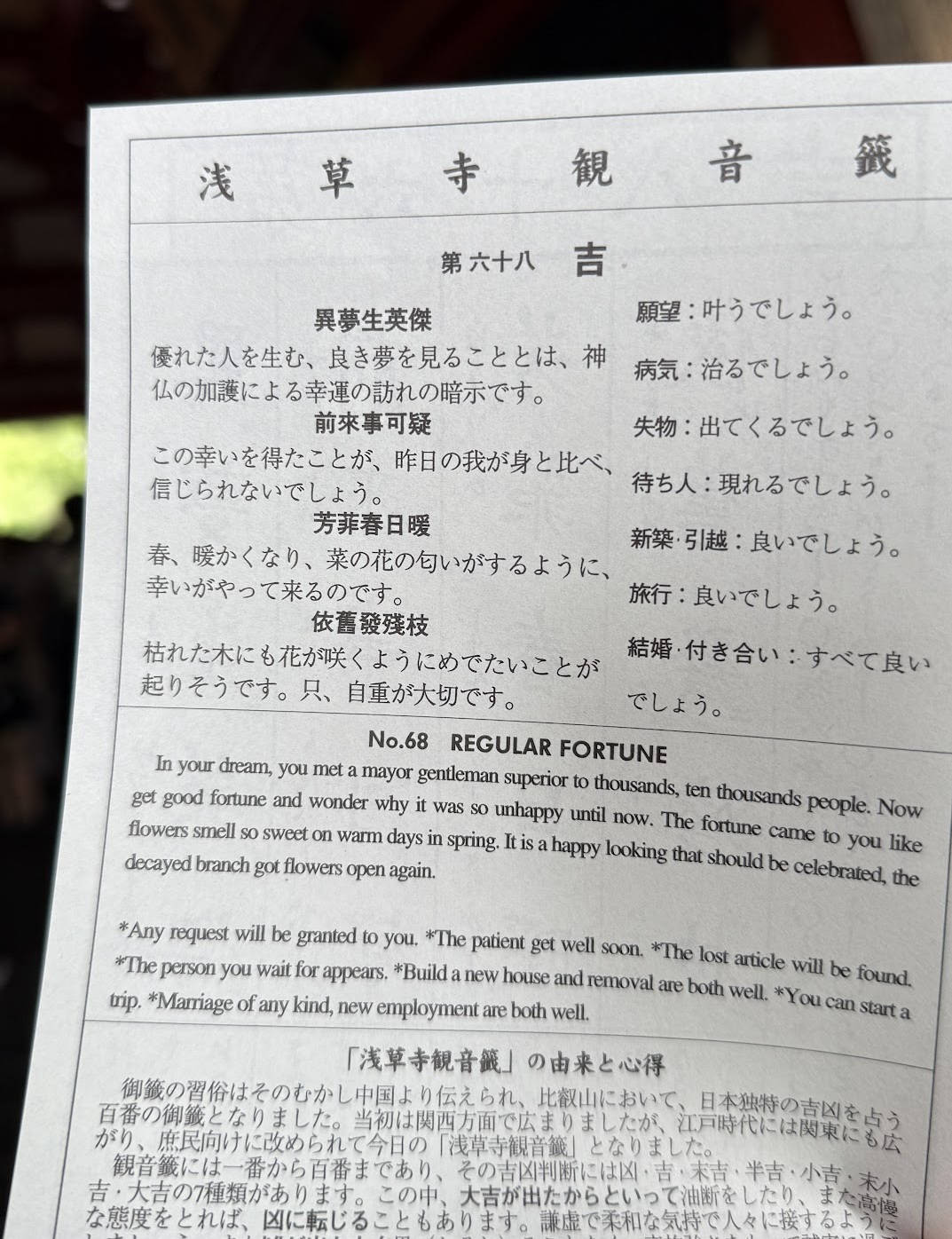
At Senso-ji, roughly 30% of fortunes drawn are kyo—bad luck. That rate is far higher than at most Japanese shrines, and it is entirely deliberate. Japanese Buddhism has a different relationship with misfortune than Western visitors might expect. Bad luck is not a curse; it is a warning and an invitation.
When you draw kyo, you tie the paper to the metal rack and leave the bad luck in the hands of the deity. The ritual itself is the point—the active acknowledgment that some things are beyond your control, and the conscious decision to surrender them. That is not superstition. That is philosophy.
5-yen coin (五円玉): The Japanese pronunciation go-en is a homophone for 縁 (en), meaning “connection” or “fate.” Offering a 5-yen coin is not about the monetary value; it is about invoking the concept of meaningful connection.
The Timing Secret: How the Light Changes Everything
Japanese people have a concept called ma (間)—the meaningful use of negative space, of silence and interval. Asakusa operates on ma. Visit at the wrong time and the district is noise; visit at the right time and it breathes.
Before 8 AM: The Shutter Gallery
The shop shutters of Nakamise are painted with traditional Edo-era imagery—scenes that are completely invisible once the stores open. Early morning walkers see a private art exhibition that the daytime crowd never knows exists.
After 8 PM: The Illuminated Temple
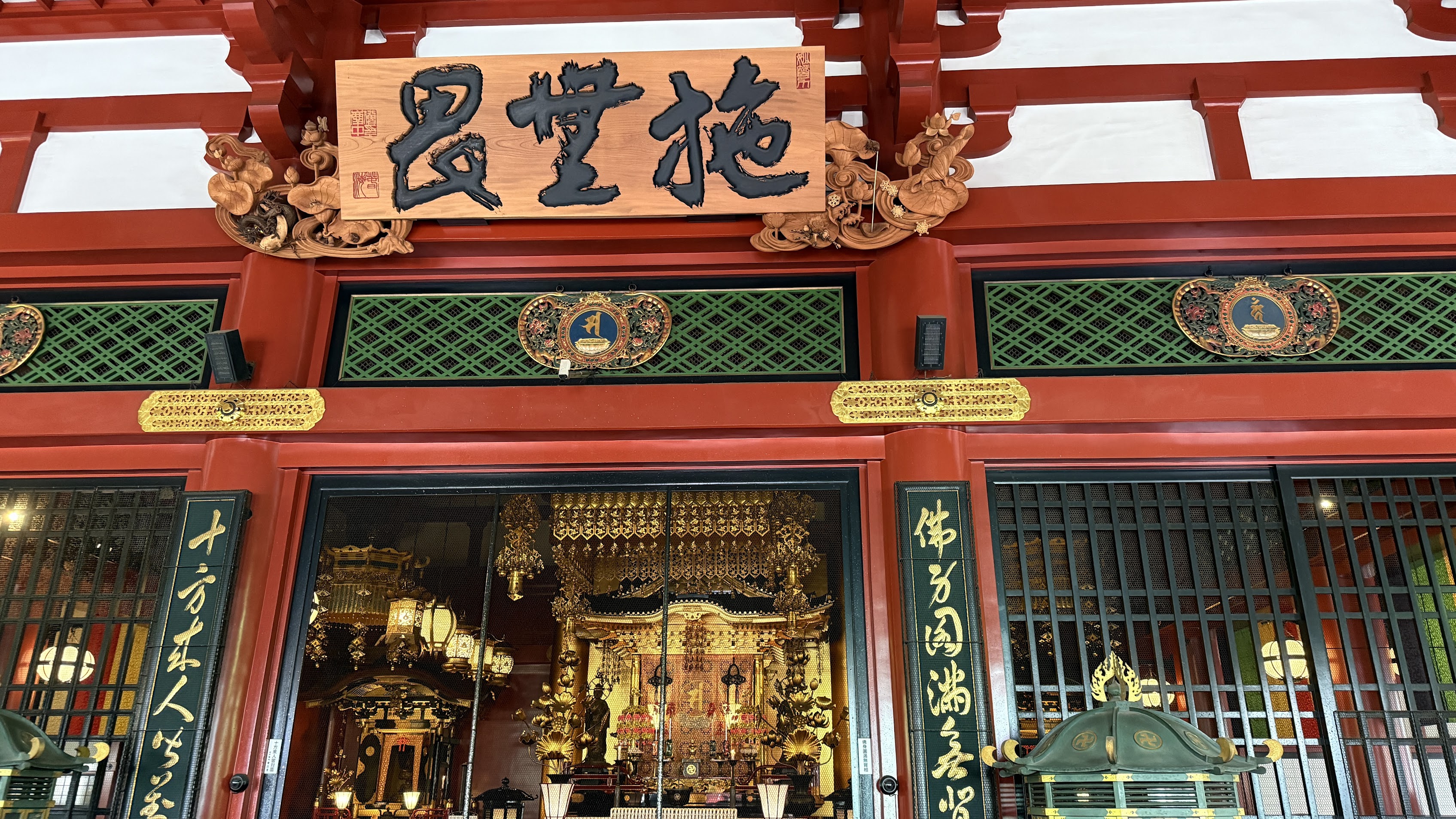
The main hall is lit until 11 PM. The tourists are gone. The temple grounds return to something approaching their purpose: a place of stillness and quiet power. The incense smoke rises differently in the night air. Go at least once.
What to Eat, and Why Each Dish Has a Story
Agemanju: The Snack That Funded the Temple
Deep-fried manju (sweet bean-paste buns) are sold everywhere on Nakamise. What most visitors don’t know is that the profits from temple-gate food stalls have historically contributed to temple maintenance funds. When you buy agemanju, you are, in a very small way, participating in the patronage system that has kept this temple alive for nearly 1,400 years.
Monjayaki: The Food That Refuses to Be Photogenic
Monjayaki is liquid, messy, and impossible to photograph well. For this reason, it has become the most honest food in Tokyo—eaten for pleasure, not for content. Mix batter, cabbage, and whatever meat or seafood you like on a tabletop griddle, then scrape and eat it directly from the iron surface with a tiny spatula. The texture is unlike anything else. Asakusa’s version (Asakusa monja) uses a slightly sweeter batter than the Tsukishima style. Order it at any of the old restaurants north of the temple for the full shitamachi experience.
“Ura-Asakusa” Matcha: Tea as Calibration
A 10-minute walk north of Senso-ji lies what locals call Ura-Asakusa (“Back Asakusa”)—a network of quieter streets with small tea houses and craft workshops. The tea served here is not the Instagram-ready ceremonial kind but usucha: a lighter, more everyday bowl of green tea that Japanese people actually drink. It costs about ¥800 and will recalibrate your nervous system after the sensory overload of Nakamise.
Cultural Participation: The Difference Between Watching and Being
Kimono as Costume vs. Kimono as Commitment
Kimono rental shops are everywhere in Asakusa. There is nothing wrong with renting one for photographs. But the Japanese experience of kimono is different: it is a garment that disciplines your body. You cannot slouch in a kimono. You cannot run. You must adjust your stride, your posture, the angle of your wrists. For the hour you wear it correctly, you understand something about the culture that no amount of reading can convey.
Seek out shops offering vintage, repurposed silk kimonos rather than synthetic tourist versions. The older fabrics move differently and carry something of the person who first wore them.
Rickshaws (Jinrikisha): Oral History on Wheels
The shafu who pull rickshaws through Asakusa are not costumed performers. Many have trained for years and carry encyclopedic knowledge of the district’s history. They know which merchant house survived the 1923 Great Kanto Earthquake, which alley was a geisha route in the Meiji era, and where the best photograph of the Skytree framed by temple roofs can be taken. A 30-minute rickshaw ride is the most efficient education Asakusa offers.
Connecting Past to Future: The Skytree Paradox
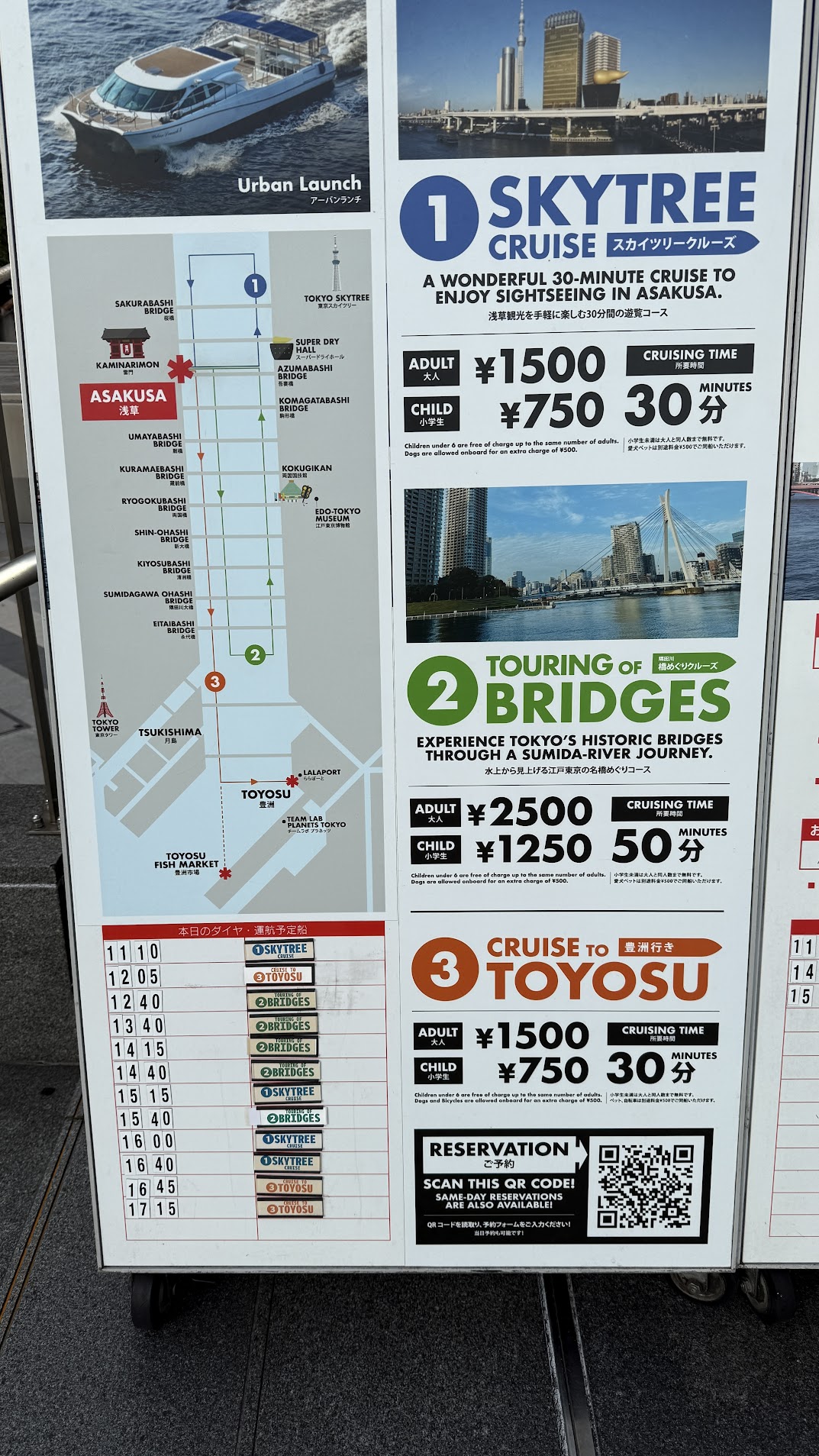
Walk 15 minutes east of Senso-ji across the Sumida River, and you arrive at Tokyo Skytree—the world’s tallest broadcasting tower. The visual contrast is intentional and meaningful: a 628 AD temple and a 634-meter 21st-century structure facing each other across a river. Japan does not see this as contradiction. The word wa (和), meaning harmony, does not mean uniformity. It means finding balance between different forces.
That tension—ancient and hypermodern existing within sight of each other without canceling each other out—is the defining characteristic of Tokyo, and Asakusa is where you feel it most clearly.
Practical Information
- Access: Asakusa Station (Tokyo Metro Ginza Line, Toei Asakusa Line, Tobu Skytree Line)
- Best timing: Arrive before 8 AM or after 7 PM for a genuinely different experience
- Senso-ji grounds: Open 24 hours; main hall 6 AM–5 PM (Oct–Mar: 6:30 AM)
- Payment: Most shops now accept cards, but carry ¥5 coins for temple offerings
Asakusa does not reward rushing. The district gives itself to those who arrive without an agenda and allow the place to set the pace. That is not a tourist tip—it is the operating principle of shitamachi culture itself.