There is a word in Osaka dialect—kuidaore (食い倒れ)—that describes the city’s foundational value: to eat until you go broke. To bankrupt yourself on pleasure. To treat the table as the highest form of civilization.
No other major Japanese city has a word like this. Tokyo doesn’t. Kyoto doesn’t. This is not because people in Tokyo and Kyoto don’t love food. It’s because those cities, in their different ways, treat food as one value among many—alongside status, aesthetics, discipline, tradition. Osaka treats food as the value from which others derive. The logic is: if the food is good and the sake is flowing and the people around the table are happy, the rest of the civilization is probably fine.
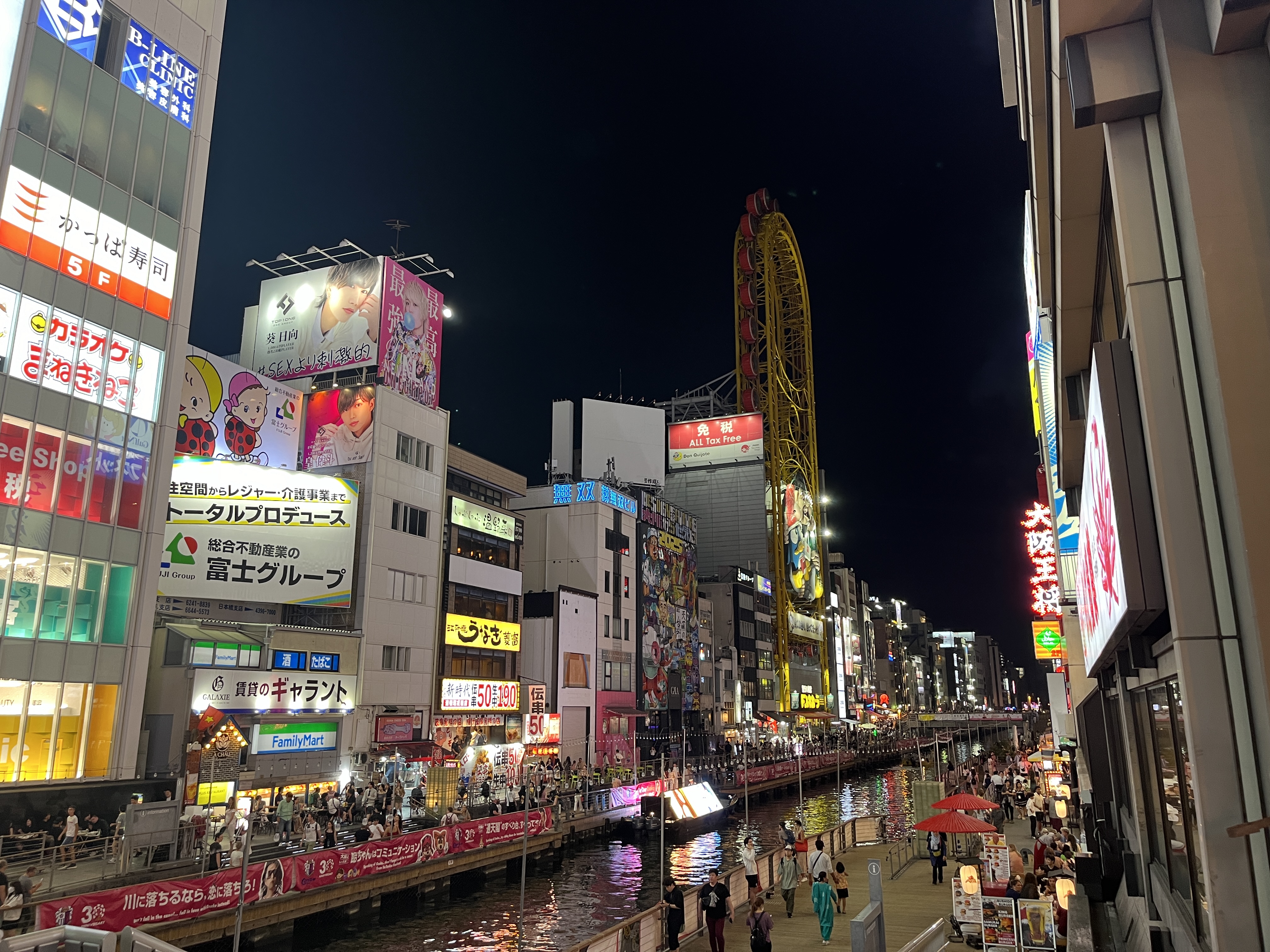
Dotonbori (道頓堀) is where this logic is taken to its fullest, loudest, most neon-saturated expression.
Understanding What You’re Actually Looking At
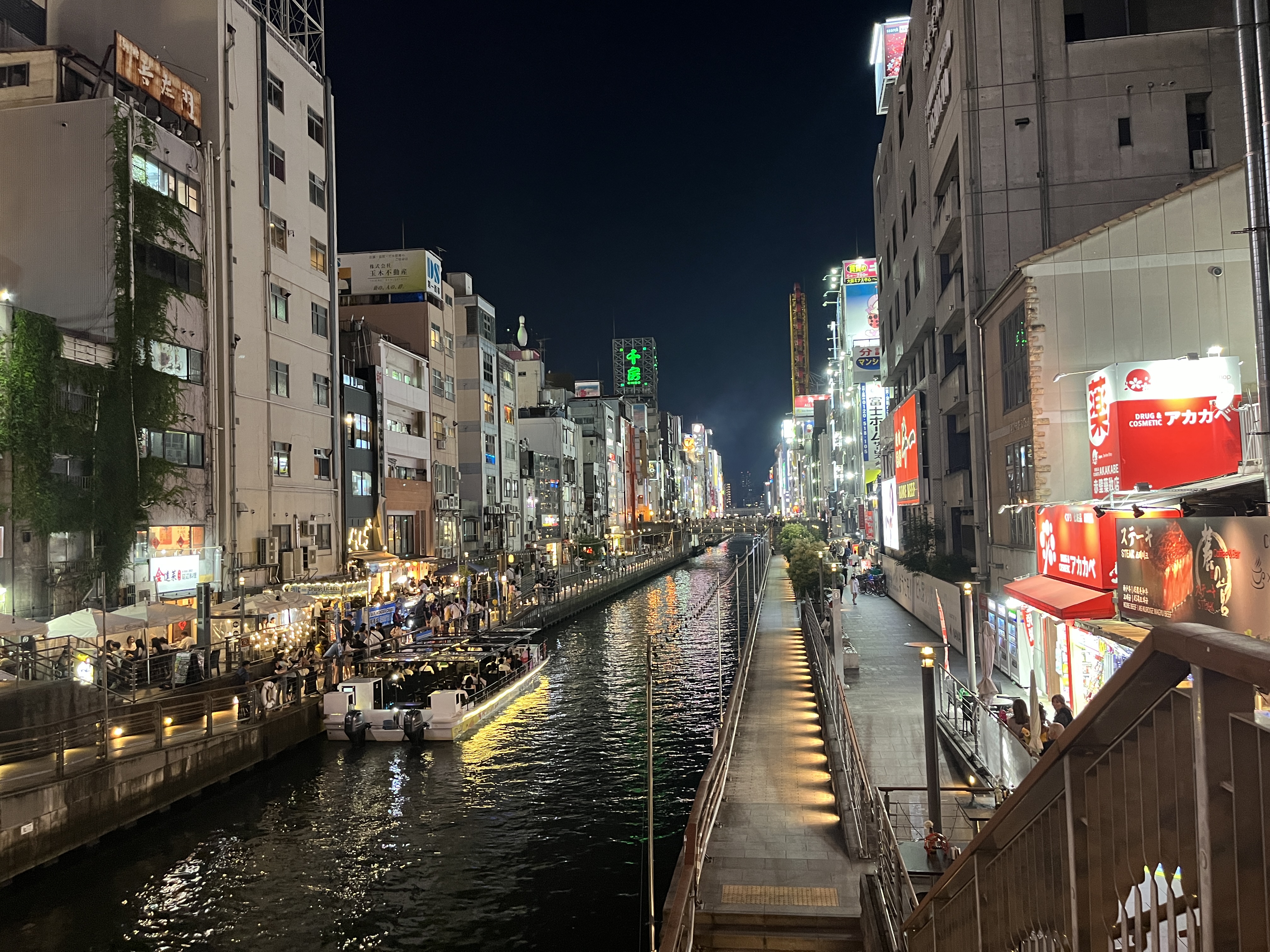
The Dotonbori canal was built in 1615 by a merchant named Doton, who funded its construction from his own resources in the expectation that the new waterway would stimulate trade. He was right. The area became Osaka’s entertainment district within decades—theaters, puppet shows, teahouses, restaurants, and the kind of commercial energy that Osaka has never entirely lost.
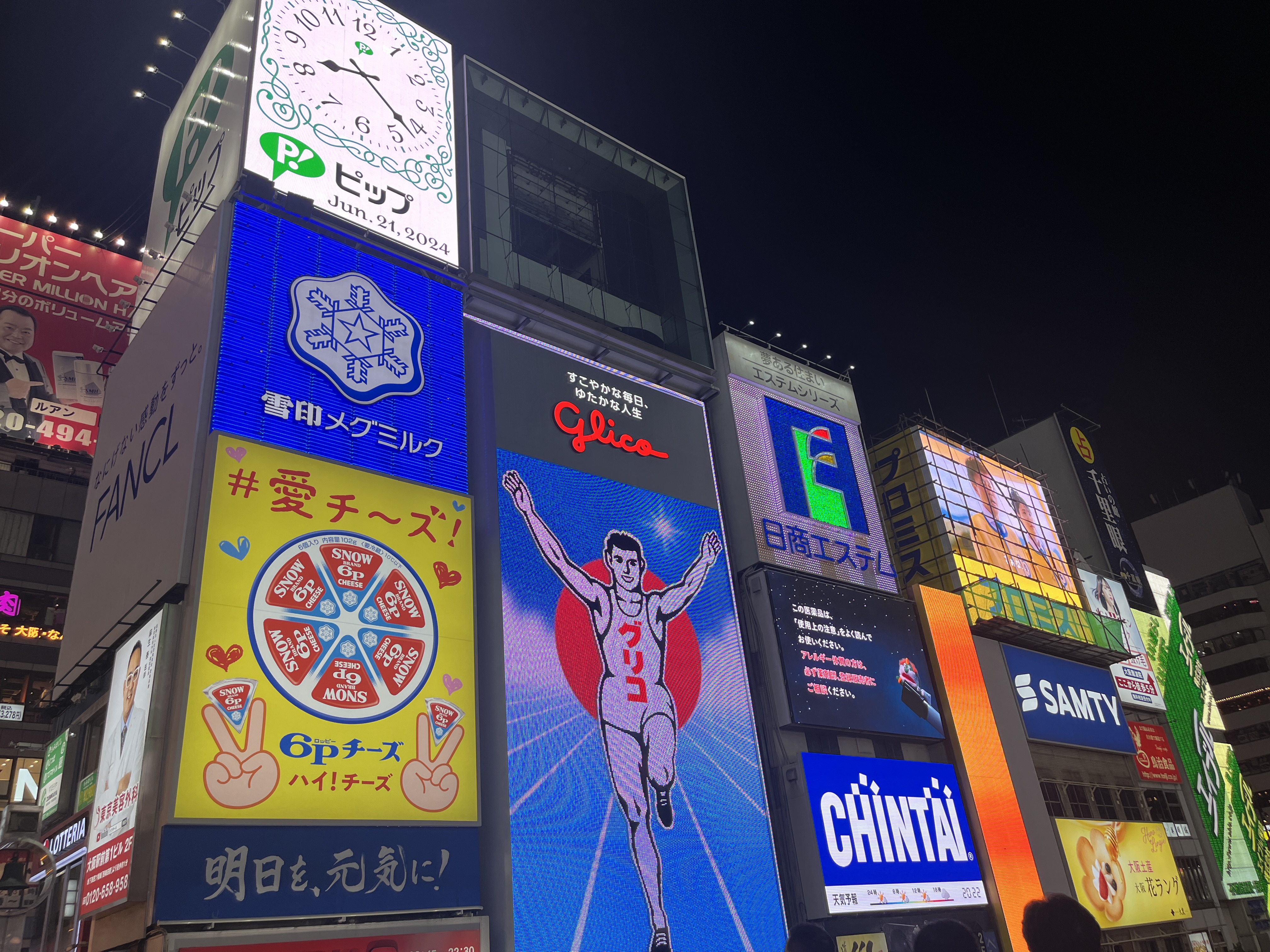
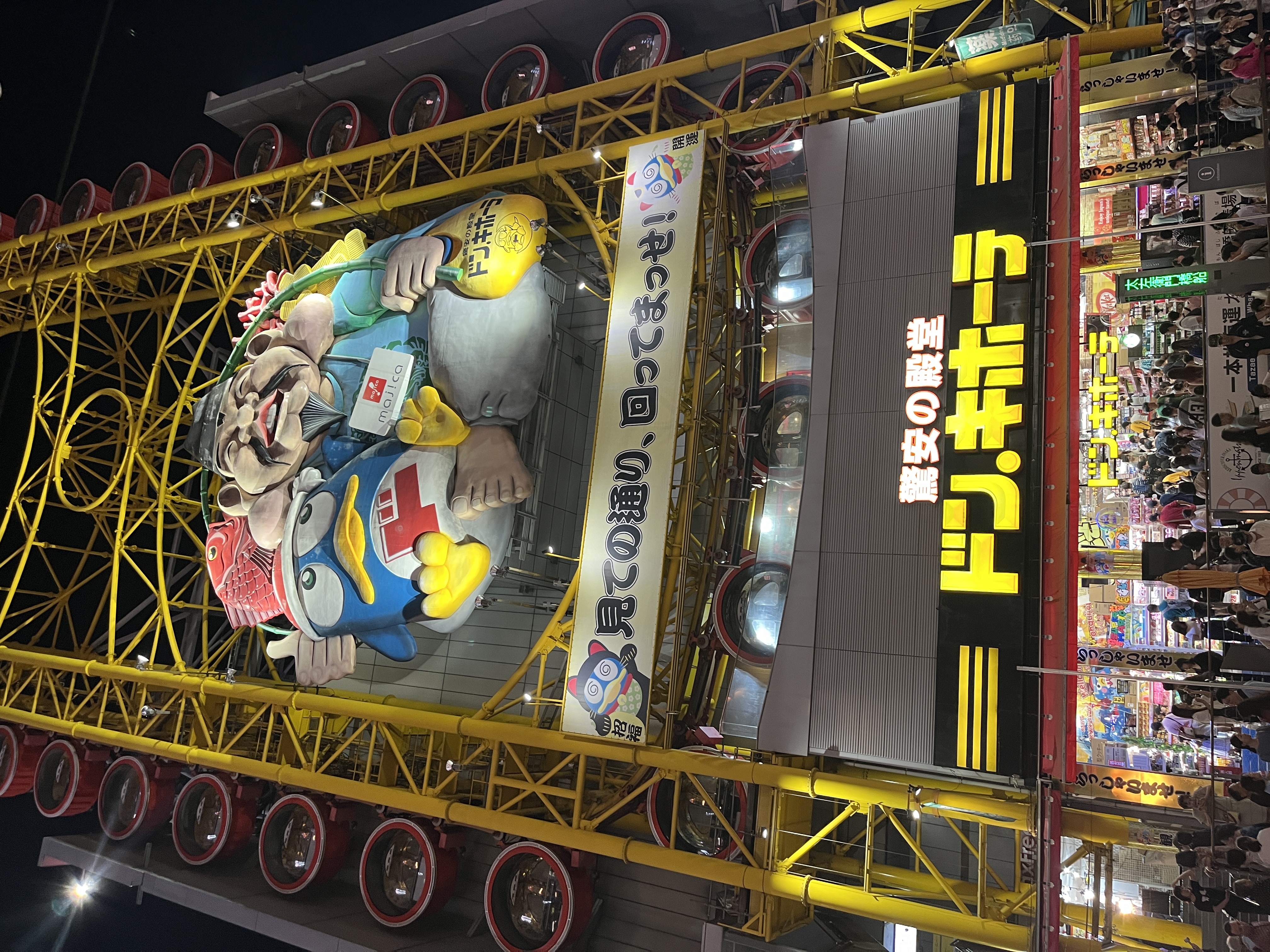
The giant mechanical signs that have become Dotonbori’s most recognizable feature—the Glico Running Man, the Kani Doraku crab with its moving claws, the Kinryu Ramen dragon—are the contemporary version of the same impulse that built kabuki theaters here 400 years ago. Osaka has always understood that commerce and spectacle are the same thing.
The Glico Running Man sign has been there since 1935, in various versions. The current version is the sixth. When the Hanshin Tigers baseball team wins the pennant, Osaka residents jump from the Ebisubashi bridge into the canal. This happens with enough regularity that there are informal protocols for it. The bridge has become a ritual location for collective Osaka joy. This is the kind of thing no amount of tourism branding can manufacture, and it is completely genuine.
How to Eat Dotonbori: A Japanese Perspective
Most travel guides list the famous dishes. What they rarely explain is the cultural logic that makes these dishes meaningful rather than just tasty. Here is that context:
Takoyaki (たこ焼き): The Democracy of Street Food
Octopus balls—batter fried around pieces of tako (octopus) in a specialized molded pan—are not Dotonbori’s invention, but they became its emblem. The dish was created in Osaka in the 1930s and spread across Japan as postwar street food. It is now eaten everywhere, but eating it in Osaka is still a different experience because of the volume and variety: dozens of stands on a single block, each claiming to be the best, each with a slightly different approach to batter consistency, topping ratio, and dashi flavor.
The correct way to eat takoyaki is immediately, standing, burning your tongue. The interior should still be liquid when the exterior is crisp. Waiting for them to cool defeats the purpose. The paper tray, the tiny wooden picks, the bonito flakes moving in the steam—this is the dish in its intended form.
Kukuru in the Dotonbori arcade is frequently cited as among the best, though “best” in this context is genuinely contested and Osakans take the debate seriously.
Kushikatsu (串カツ): The One Rule That Defines the Dish
Breaded and deep-fried skewers—vegetables, meat, seafood, cheese—served with a communal dipping sauce. The sauce is thin, sweet-savory, and perfect. It is also shared by everyone at the counter.
The rule: Do not dip a skewer twice. Nido zuke kinshi (二度漬け禁止) is displayed at every real kushikatsu restaurant. You dip once, eat, and if you want more sauce you use a piece of cabbage (always provided free) to transfer sauce to your food.
This rule is not arbitrary etiquette. It is fundamental to the communal nature of the dish—the sauce belongs to everyone, and contaminating it with a half-eaten skewer would ruin it for the next person. Japanese food culture is filled with this kind of logic: individual pleasure structured by consideration for the collective. Kushikatsu is one of its clearest expressions.
The best kushikatsu in Dotonbori is not in the glossy restaurants facing the canal. Walk one or two blocks back from the main strip—where the signage is older and less polished—and you will find the stands that Osakans actually use.
Okonomiyaki (お好み焼き): Osaka’s Argument with Hiroshima
Okonomiyaki—savory pancake with cabbage, batter, eggs, and your choice of fillings—is Osaka’s most debated food, specifically because Hiroshima does an entirely different version of the same dish and refuses to acknowledge it as inferior.
The Osaka version mixes all ingredients into the batter before cooking. The Hiroshima version layers them separately—noodles, then cabbage, then batter, then toppings—producing a different texture and structure. Both cities regard the other’s method with gentle contempt. The argument has been ongoing for at least 70 years and shows no sign of resolution.
In Dotonbori, you will eat the Osaka version: thick, eggy, topped with sweet otafuku sauce, mayonnaise, bonito flakes, and seaweed powder. Many restaurants let you cook it yourself on the table griddle. This is the right way to eat it.
The Geography of Dotonbori: Canal vs. Backstreets
The main canal promenade is for walking, looking, and photographing. The neon signs are best seen from the Ebisubashi bridge or the canal-level walkway after dark. The boat cruises on the canal offer a useful perspective on the signage scale—the Glico Man is 7.5 meters tall, which you don’t register until you see it from water level.
The backstreets are where you actually eat. The blocks running south from the canal—particularly the covered arcade of Shinsaibashi-suji and the narrower alleys branching off it—contain a density of restaurants, izakayas, and specialty food shops that rivals anywhere in the world. Get slightly lost. Follow your nose. Osaka doesn’t particularly care if you know where you’re going; it cares if you’re eating.
Osaka vs. Tokyo: The Cultural Difference You Feel in Your Stomach
Japan is not a monolithic culture. Tokyo and Osaka are the country’s two dominant urban personalities, and they are genuinely different in ways that go beyond dialect and food.
Tokyo culture is tatemae-dominant: careful presentation, restrained expressiveness, reading the social atmosphere before speaking. Osaka culture is closer to honne-dominant: direct, expressive, more comfortable with noise and negotiation and the frank expression of what you actually want (usually: more food, more sake, a better price on something).
When you walk into a restaurant in Dotonbori and the staff shouts irasshaimase! (welcome!) in a way that carries genuine enthusiasm rather than ritual obligation, you are experiencing this difference. When an Osaka shopkeeper jokes with you about being a tourist rather than performing polished indifference, you are experiencing it. When an old woman at the counter next to you at a kushikatsu bar starts a conversation with you without any social permission-seeking, you are experiencing it.
This openness is what many visitors remember most clearly about Osaka—more clearly, even, than the specific food. The city is genuinely atsui (熱い)—warm, in a way that the word “hospitality” doesn’t quite capture.
Practical Tips
Timing: Come between 6 and 10 PM. The neon is active, the restaurants are full, the energy is at its peak. Weekday evenings are easier to navigate than weekends, when the crowds peak significantly.
Cash: While urban Osaka is increasingly card-friendly, small stands and older restaurants remain cash-only. Carry ¥10,000–¥20,000 in cash for a serious food evening.
Eating while walking: Technically considered impolite in most of Japan. Dotonbori is the exception—street food is designed to be eaten standing near the stall. The key distinction: eat at the stall, not while walking in transit.
Alcohol: Japanese convenience stores (Family Mart, 7-Eleven, Lawson) sell beer and chuhai (canned cocktails). Drinking these while walking Dotonbori on a warm evening, watching the Glico Man reflect in the canal, is a legitimate Osaka experience and costs about ¥200.
A Note on Authenticity
Dotonbori is often called “touristy” by Japanese travelers who prefer quieter neighborhoods. This is accurate but misses the point. Dotonbori is touristy because it has always been Osaka’s entertainment district—because the people who built it in the 17th century wanted exactly what it has become: a loud, generous, unashamed celebration of the pleasures of eating and drinking and being alive with other people.
That is not inauthenticity. That is the oldest and most honest thing about the place.
The word kuidaore does not suggest recklessness. It suggests a set of values: that pleasure taken with others is worth the cost, that the table is sacred, and that the city which produces this kind of joy has understood something important about what cities are for. Eat accordingly.