Every Japanese child learns about August 6, 1945 in school.
Not as a chapter in a history textbook—though it is that too—but through hibakusha accounts read aloud in classrooms, through the story of Sadako Sasaki, through senbazuru (千羽鶴, the folding of 1,000 paper cranes) as an elementary school project, and through the word genbaku (原爆, atomic bomb) acquiring a weight that children in other countries simply do not carry in the same way.
I first visited Hiroshima Peace Memorial Park as a child on a school trip. I visited again as a teenager, as a university student, and multiple times since. Each visit has been different because I have been different. The park does not stay still; what it means to you shifts as you change.
This is what travel guides typically don’t say about Hiroshima: it is not simply a destination. For Japanese people, it is an ongoing relationship with a specific hour—8:15 AM, August 6, 1945—and with the question that hour has never stopped asking: What do we do with this?
The Design of the Park: Architecture as Argument
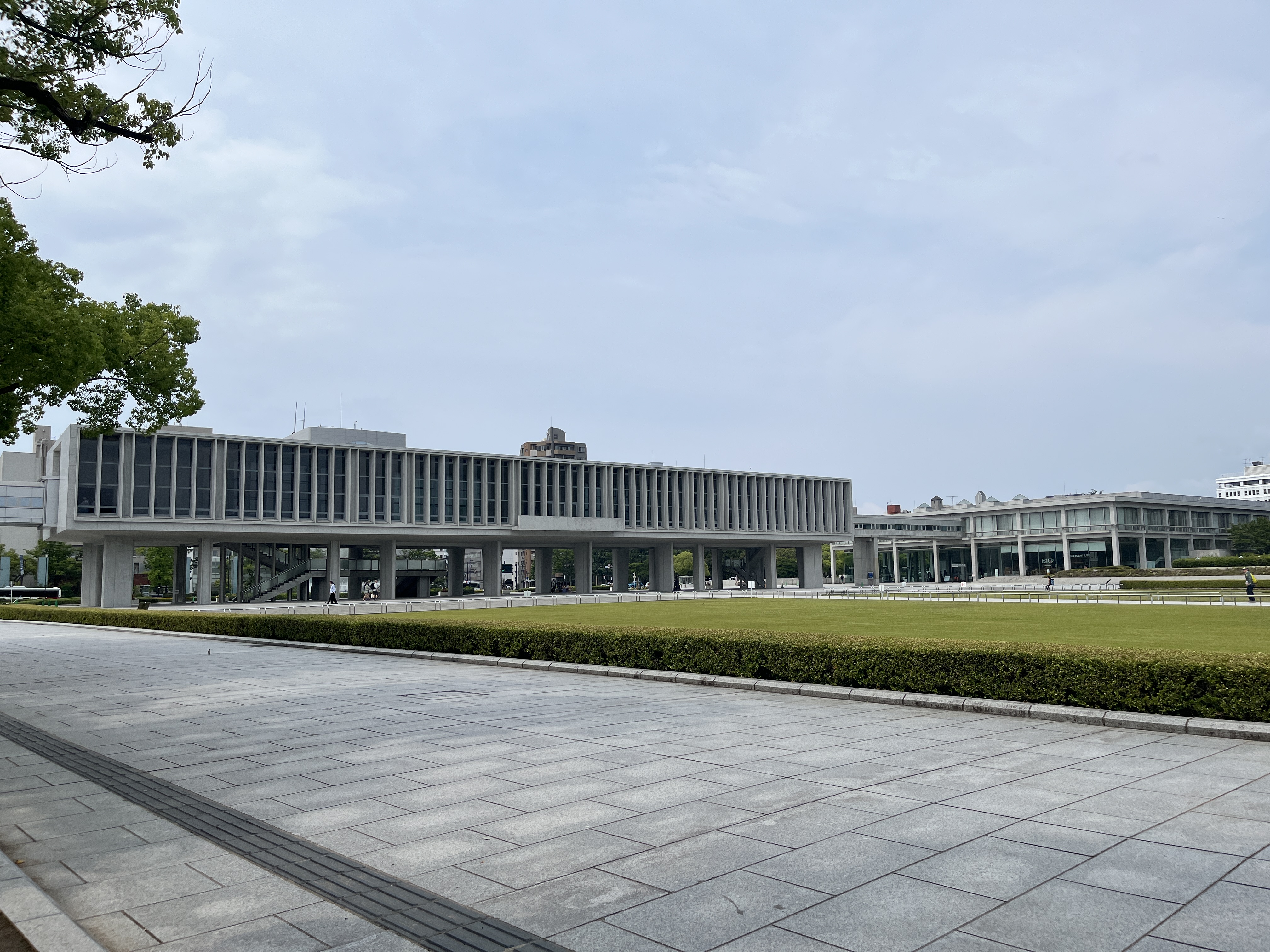
Hiroshima Peace Memorial Park was designed by architect Kenzo Tange, who completed the plan in 1955. Tange went on to become one of the most influential architects of the 20th century, but this was his first major commission, and it is arguably still his most powerful.
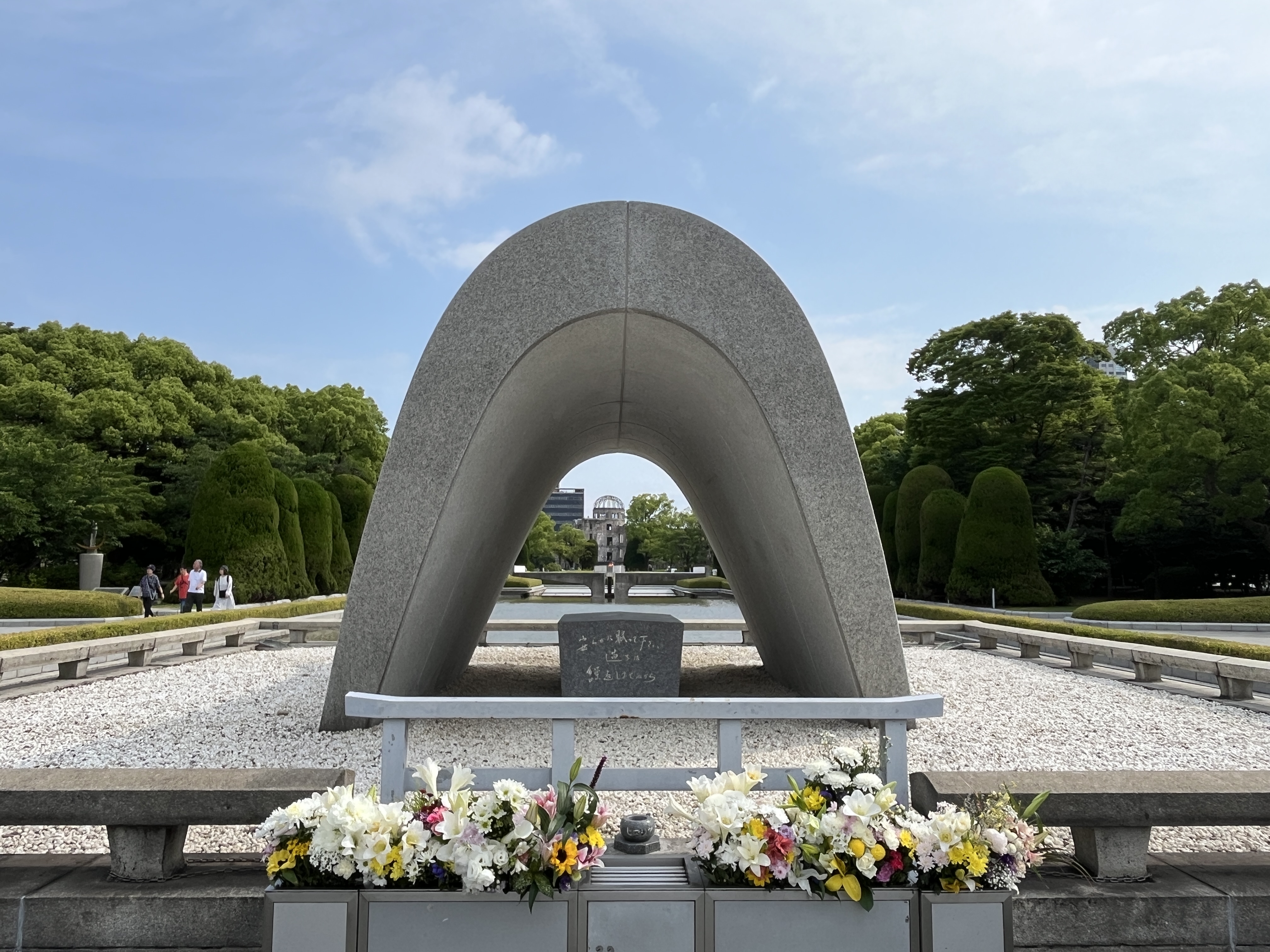
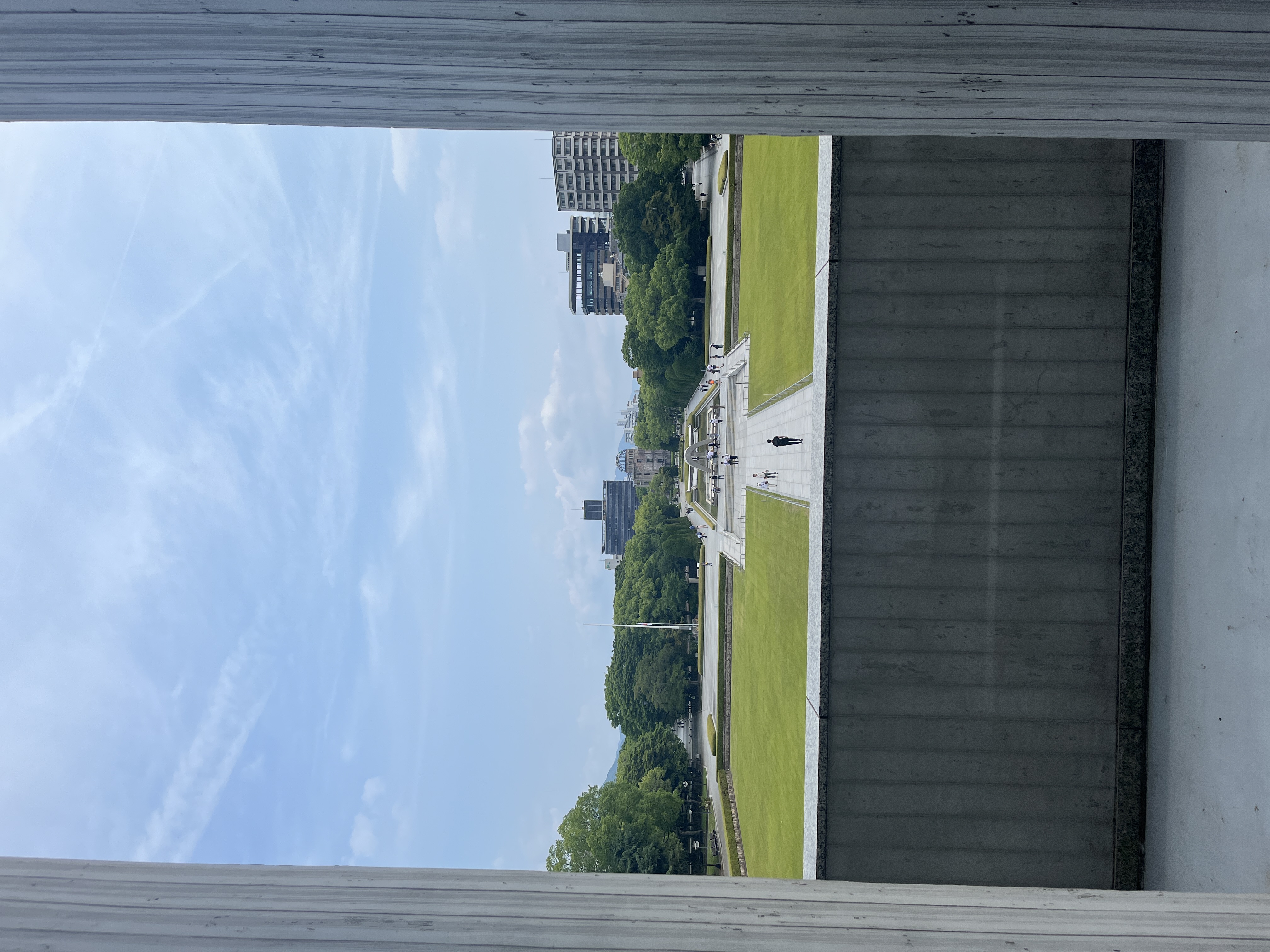
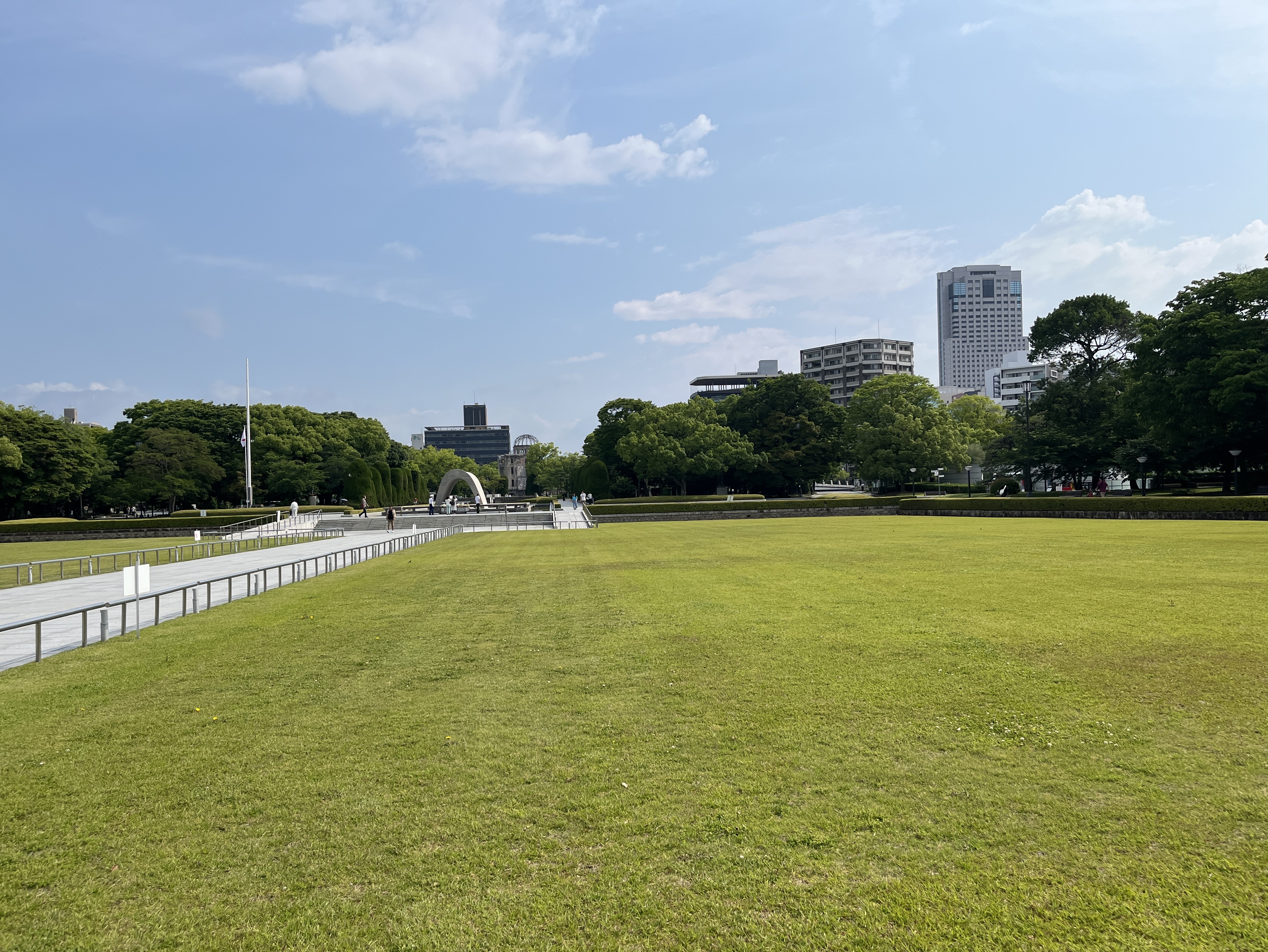
The park’s design makes an architectural argument that is best understood from one specific position: standing at the Cenotaph (the arched stone monument at the park’s center) and looking north. Through the arch of the Cenotaph, perfectly framed, is the Atomic Bomb Dome—the skeletal ruins of the former Industrial Promotion Hall, the structure that stood almost directly below the bomb’s detonation point and survived precisely because the explosion was nearly directly overhead rather than at an angle.
This alignment was deliberate. Tange designed the Cenotaph as a frame for the Dome, so that visitors standing at the memorial for the dead look directly at the most physical reminder of how they died. The Flame of Peace burns between them. The Peace Pond reflects sky and Dome and flame together.
The inscription on the Cenotaph reads: 安らかに眠って下さい 過ちは 繰り返しませぬから — “Rest in peace, for the error shall not be repeated.”
The subject of that sentence—who committed the error and who swears not to repeat it—is grammatically ambiguous in Japanese. This has been the subject of debate since the inscription was placed in 1952. Is it the city of Hiroshima speaking? Humanity as a whole? Survivors? The Japanese state? The ambiguity is not careless; it is the statement’s central meaning. The responsibility for nuclear violence belongs to everyone.
The Atomic Bomb Dome: Standing Before a Building That Refused to Fall
The Genbaku Dome (原爆ドーム)—the Atomic Bomb Dome—was listed as a UNESCO World Heritage Site in 1996, the same year as Miyajima. It was not a universally popular decision. The United States and China both abstained from the vote. The argument against listing it was that it might inflame nationalist sentiment or serve as a monument to victimhood rather than peace.
The argument for listing it was simpler: it is the only surviving physical evidence of a nuclear weapon’s effect on an urban environment. Every other building within 2 kilometers of the hypocenter was destroyed. This building stood because, at the moment of detonation, the bomb was directly above it—meaning the downward force of the blast struck the building’s roof and passed straight through rather than catching its walls. The dome structure lost its top floors but kept its iron frame. It became a monument by accident.
Japan has maintained the ruin exactly as it has been since 1945—deliberately not restoring or rebuilding it. Preservation of ruins is unusual in Japanese culture, which typically rebuilds sacred and important structures rather than maintaining their damaged states. The decision to preserve the Dome in its ruined form represents a conscious departure from this tradition: a commitment to keeping the evidence visible.
Stand in front of it and notice the impulse to photograph it immediately. Then notice what happens if you put the camera down and simply look at the building for a few minutes. It is a different experience.
The Peace Memorial Museum: How to Experience It Without Collapsing Under Its Weight
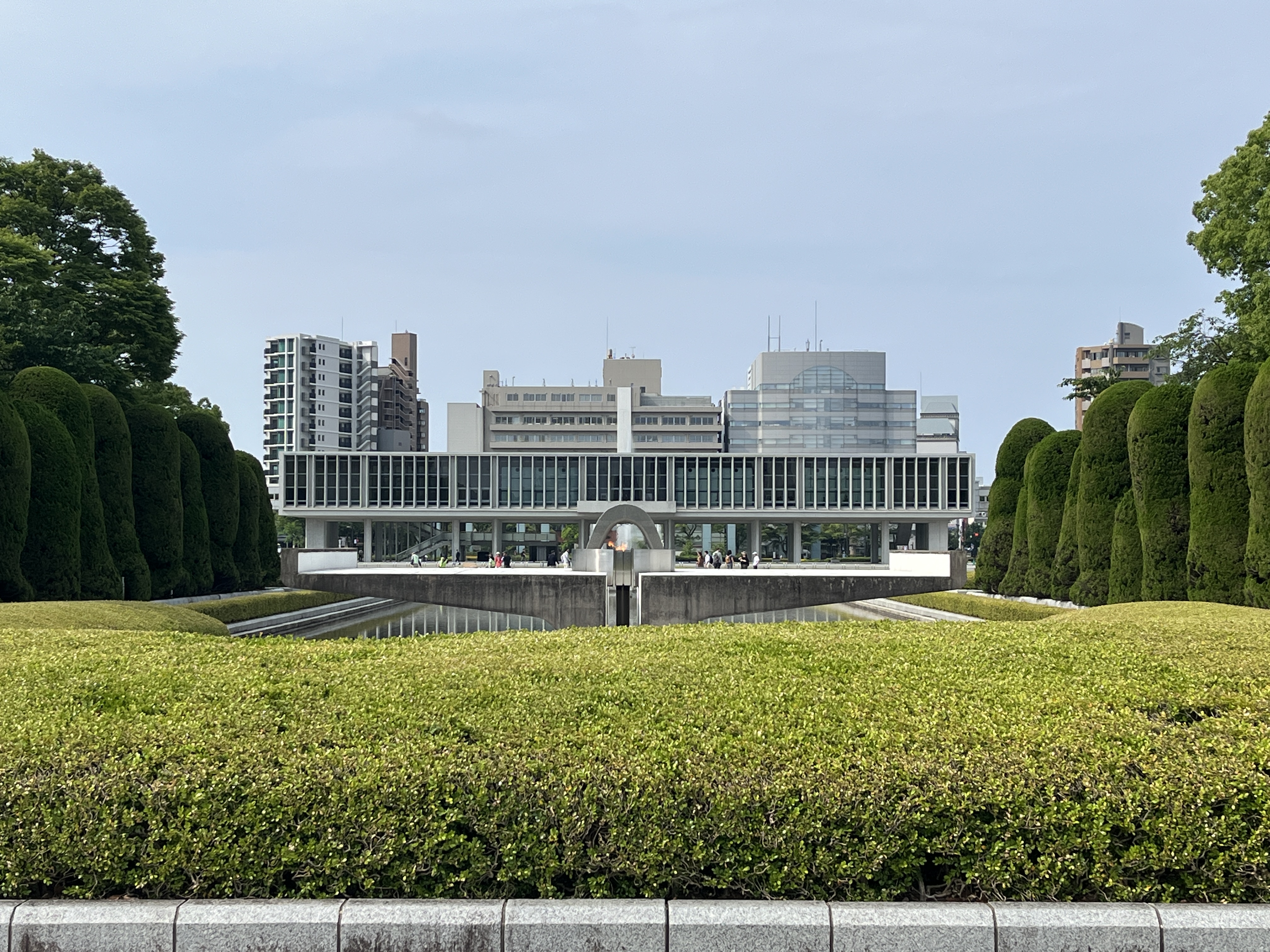
The Hiroshima Peace Memorial Museum is divided into two buildings. The main building, which was the subject of a major renovation completed in 2019, is the part most visitors find overwhelming.
The renovation made a significant curatorial decision: it moved the museum’s center of gravity from historical/geopolitical context toward individual human stories. There are now displays of the actual belongings of victims—a child’s lunch box with carbonized rice, a watch stopped at 8:15, a shadow burned into stone steps. There is the section on human physical effects that some visitors find difficult to continue through.
How to navigate this emotionally:
The museum is designed to be experienced slowly. Allow a minimum of 90 minutes; two hours is better. Read the individual stories. The museum’s power comes not from statistics (how many people died in the blast and its aftermath: approximately 140,000 by the end of 1945) but from the particularity of individual lives that were interrupted. A name. A photograph. A piece of clothing.
Many visitors—Japanese and international—cry in the museum. This is not embarrassing. It is appropriate. The museum is designed to produce this response because grief is the correct emotional register for what happened here.
What you might not expect: the museum ends with a section on nuclear weapons today—testing, stockpiles, proliferation. The emotional weight of the earlier sections is deliberately carried into this contemporary context. The museum is not a memorial to the past; it is an argument about the present.
Audio Guides and Volunteer Guides
English audio guides are available and excellent. But the most valuable option—often underused by international visitors—is the volunteer guide program. These are Hiroshima residents, many of whom had family members who were hibakusha (被爆者, atomic bomb survivors), trained to lead tours in English. The conversation you have with a volunteer guide about what this place means to the people who live in this city is irreplaceable.
The Children’s Peace Monument: Sadako and the Question of Hope
Sadako Sasaki was two years old when the bomb fell. She survived the initial blast but developed leukemia ten years later—one of thousands of victims who died years after 1945 from radiation-induced illness. During her hospitalization, she folded paper cranes in response to the Japanese tradition that 1,000 cranes (senbazuru) grant a wish to the folder.
She did not reach 1,000 before she died in October 1955. She was 12.
Her classmates completed the cranes and began a campaign that grew into one of the largest peace education movements in Japanese history. The Children’s Peace Monument was erected in 1958, funded by contributions from Japanese children nationwide. The girl at the top of the monument holds a golden crane. Beneath her, in display cases, are the millions of paper cranes sent from around the world annually.
Every year, Japanese elementary schools fold senbazuru and send them to Hiroshima. This is a national practice. It is why, when Japanese adults visit this monument, they are not seeing it for the first time—they are returning to something they participated in as children. The monument is part of their own history, not just the city’s.
You can bring cranes to donate. Origami paper is sold at shops near the park.
August 6: The Peace Memorial Ceremony
At 8:15 AM on August 6 every year, Hiroshima stops.
The Peace Memorial Ceremony is held in the park. The mayor of Hiroshima reads the Peace Declaration. The Prime Minister of Japan attends. Representatives of foreign governments attend. At exactly 8:15, a bell rings and the entire city observes a minute of silence.
If you can arrange your trip to be in Hiroshima on August 6, attend the ceremony. You will be standing at the site of one of the most consequential moments in human history, at the precise hour that moment occurred, with thousands of people who carry the weight of it in their inheritance.
This is not tourism. It is something else—a form of witness that does not have a common English word for it.
Hiroshima Today: The City That Rebuilt Itself
One thing that surprises many visitors: Hiroshima is a vibrant, prosperous, ordinary modern city. The downtown is bustling. The food scene is excellent—okonomiyaki here is different from Osaka’s version (hiroshima-yaki layers the ingredients rather than mixing them). The baseball team (Hiroshima Carp) inspires a level of fanatical loyalty that is genuinely remarkable even by Japanese baseball standards.
This is not separate from the Peace Park. It is the Peace Park’s deepest argument: that the city not only survived but chose to build something new. The formal expression of that choice is in the park’s monuments and museum. The lived expression of it is the city that exists around them.
Practical Information
- Access: From Hiroshima Station, tram lines 2 or 6 to Genbaku Dome-mae (approximately 15 minutes)
- Park admission: Free; open year-round
- Museum hours: 8:30 AM–6 PM (March–July, September–November); 8:30 AM–7 PM (August); 8:30 AM–5 PM (December–February)
- Museum admission: ¥200 adults; ¥100 high school students; free for children
- Volunteer guides: Available daily at the museum; free of charge; English available
- Time needed: Allow half a day minimum; a full day if you wish to visit the Dome, Museum, all monuments, and Hiroshima Castle
Every major city has places that matter more than other places. Hiroshima Peace Memorial Park is among the handful of places on earth that matters not just to its own country but to the entire species. Visit it as what it is: not a tourist site but a moral fact made physical, asking every person who stands in front of it what they are prepared to carry forward.