Most of Japan has been inhabited, managed, and layered with meaning for thousands of years. The landscape is not wilderness—it is cultivated nature, shaped by human presence to such a degree that the “natural” and the “cultural” are inseparable. The rice terraces of Noto, the cedar forests of Yoshino, the stone gardens of Kyoto—these are not nature, exactly. They are nature that has been in conversation with human civilization for so long that the two have become the same thing.
Hokkaido is different.
Japan’s northernmost island was not settled by mainland Japanese people until 1869—the same year the American frontier was in full operation. Before that, the island was home to the Ainu people, the indigenous inhabitants of northern Japan and Sakhalin, who lived here for thousands of years before the Meiji government decided that colonizing Hokkaido was necessary to prevent Russia from doing it first.
The 150 years of development that followed have been rapid and intensive. But 150 years is not long enough to erase the quality of a place that is still, in some essential way, in its first chapter. The roads are wider than anywhere else in Japan. The farms are larger. The sky is bigger. The distances between things are real distances, not the compressed proximity that characterizes Honshu’s urban corridors.
When Japanese people from Tokyo or Osaka talk about Hokkaido, they use a word that recurs: hiroi (広い)—wide, spacious, open. In a country where space is precious and closely managed, this openness feels like relief.
Sapporo: Japan’s Most Livable Major City
Sapporo (札幌) was planned by American agricultural engineers in the 1870s—a grid city designed for a cold climate, with wide boulevards and large parks. It is now a metropolis of 2 million people and consistently ranks among Japan’s most livable cities in domestic surveys.
The grid means you can navigate without getting lost, which is not the case in most Japanese cities. The parks—especially Odori Park, a long green corridor running through the city center—give Sapporo a spaciousness that Tokyo has long since surrendered.
Sapporo Beer Museum
Sapporo Beer has been brewed here since 1877, making it Japan’s oldest beer brand. The original redbrick brewery in the city center now houses a museum that covers the history of beer in Japan and, by extension, the history of Hokkaido’s modernization. The tasting room next door offers flights of current and historical recipes.
The connection between Sapporo Beer and Hokkaido is not just marketing. Beer was part of the Meiji government’s deliberate program to modernize and Westernize Hokkaido—German brewing technology, American wheat, local hops. The beer tastes like the industrialization of a frontier.
Moerenuma Park
On the eastern edge of the city, in what was formerly a landfill site, is Moerenuma Park (モエレ沼公園)—a major public park designed by Japanese-American sculptor Isamu Noguchi, who worked on it for the last decade of his life and died before its completion in 2004.
The park is a series of geometric earthworks: a glass pyramid, an artificial hill for sledding, a fountain synchronized to music, abstract landforms that read as sculpture when you’re on them and as landscape when you’re not. It is unlike anything else in Japan, and it is completely unknown to most foreign visitors.
This is one of the great contemporary public artworks in the world, built on garbage, finished by a man who didn’t live to see it opened. The fact that it sits on a reclaimed landfill in Sapporo, of all places, is part of what makes Hokkaido interesting: unexpected things keep arriving here and taking root.
Sapporo Snow Festival (Yuki Matsuri)
Every February, Odori Park and two other sites in Sapporo fill with snow and ice sculptures—some the size of buildings, some miniature, all created by teams from around Japan and internationally. The festival has been running since 1950 and currently attracts approximately 2 million visitors over seven days.
The sculptures created in the park’s main site are extraordinary in their scale and detail. The process—building temporary structures of enormous complexity knowing they will melt in weeks—is a physical enactment of mono no aware (物の哀れ), the Japanese sensitivity to impermanence. The festival celebrates something beautiful specifically because it will not last.
The practical reality: February in Sapporo is cold, often -10°C to -15°C with wind. Dress accordingly.
The Interior: Where Hokkaido Shows Its True Nature
Noboribetsu: The Geology of Discomfort
Noboribetsu (登別) is Hokkaido’s most developed onsen (hot spring) town, an hour south of Sapporo by express train. Its central attraction is Jigokudani (地獄谷)—Hell Valley—a volcanic crater where the earth vents sulfuric steam from hundreds of cracks and the ground itself is various shades of red, orange, and ochre.
The geology here is not subtle. Standing at the crater’s edge, breathing sulfur-heavy air, watching steam rise from the earth in dense columns—you are reminded that Japan is an archipelago sitting on the Pacific Ring of Fire, and that the hot springs Hokkaido is famous for are geothermally heated by a very active geological situation.
The hot spring water at Noboribetsu changes chemical composition depending on which spring it comes from—sodium chloride, sulfur, iron, calcium bicarbonate. Japanese onsen culture categorizes these water types (senpō) carefully and associates each with specific health benefits. Serious onsen visitors move between different baths in a single session, each offering a different mineral experience.
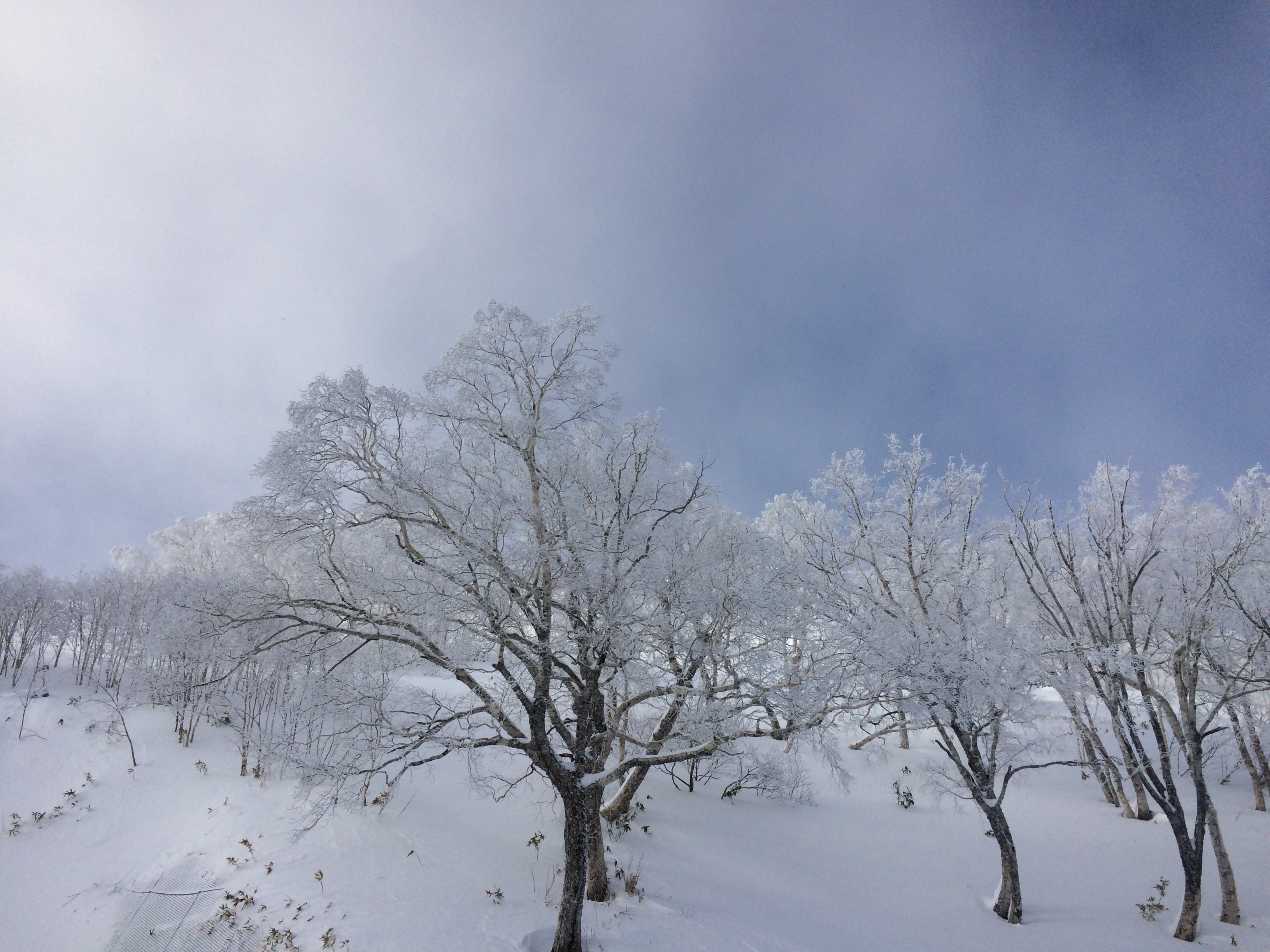
Stay overnight in one of the large ryokan in Noboribetsu if you can. The best ones have multiple outdoor baths (rotenburo) that remain open through the night—soaking in sulfur-rich water at midnight while snow falls silently around you is one of the quintessential Hokkaido experiences.
Furano: The Lavender Fields and What They Actually Mean
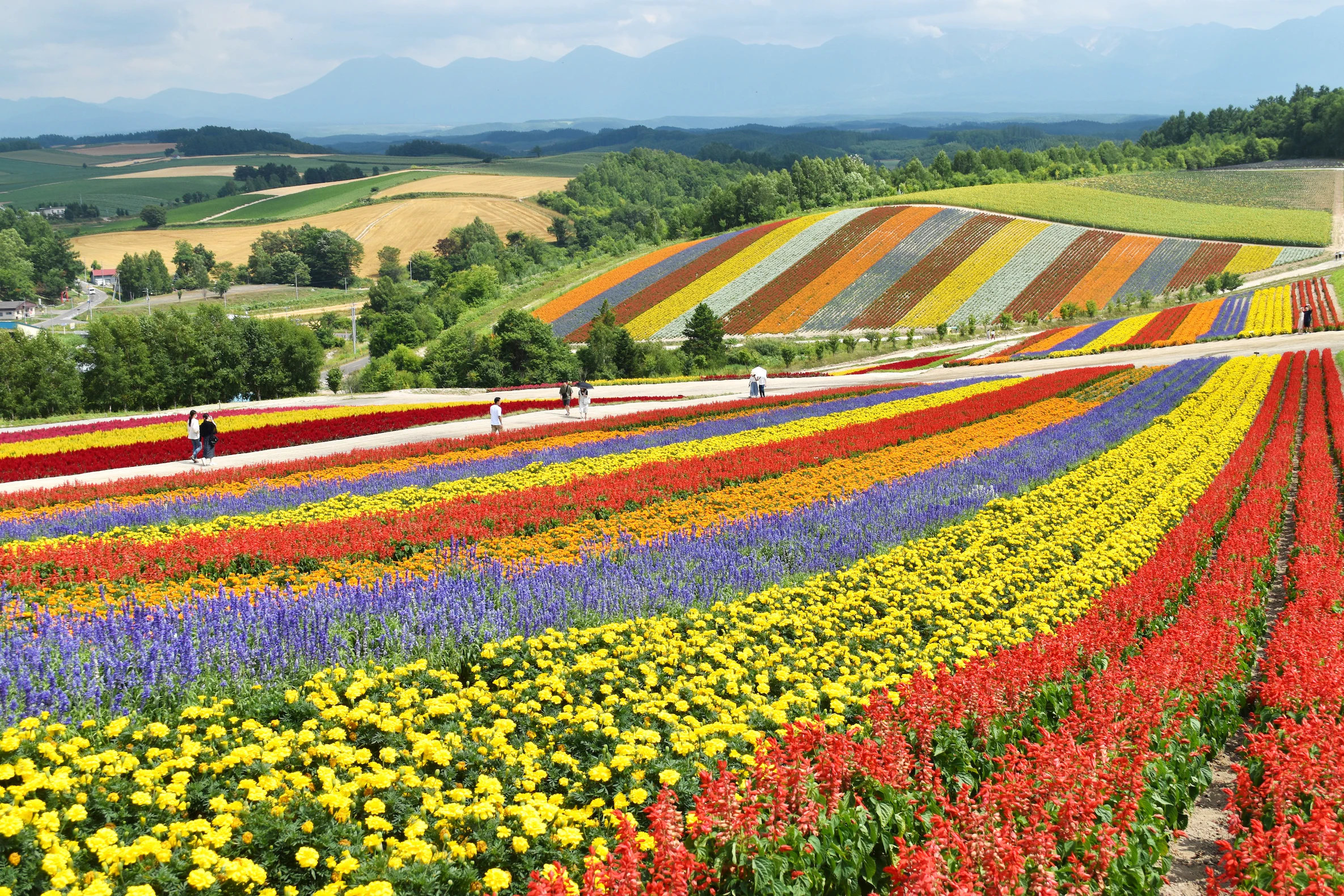
Furano (富良野) is approximately 2 hours from Sapporo by train. Its lavender fields, which peak in late June through July, have become one of Japan’s most photographed landscapes: purple rows extending to the mountains under Hokkaido’s unusually blue summer sky.
The lavender industry was largely created by the Tomita Farm in the 1970s, when the family planted lavender as a commercial crop after other agricultural ventures failed. Japanese domestic tourism turned it into a pilgrimage destination.
What the photographs don’t convey is the smell—specifically, the smell of lavender in the heat of a Hokkaido summer afternoon, combined with the hay-like quality of the surrounding farm fields. The sensory experience is significantly more interesting than the visual one, which is itself saying something.
In winter, Furano’s modest ski resort offers skiing with minimal crowds and no pretension—the antithesis of nearby Niseko. The town has a quiet, end-of-season quality in winter that contrasts sharply with its summer crowdedness and is, in some ways, more authentically Hokkaido.
Biei (美瑛), 30 minutes north of Furano by train, offers the patchwork farm landscapes that appear in Japanese calendars and TV commercials—rolling hills planted in different crops at slightly different stages, producing a quilt of greens, yellows, and purples. Rent a bicycle in summer.
Shiretoko Peninsula: Where the Wild Things Actually Are
Shiretoko (知床), a UNESCO World Heritage Site on Hokkaido’s northeastern tip, is the most wilderness-adjacent experience available in Japan. The peninsula—long, narrow, penetrated by no roads past a certain point—is home to Ezo brown bears (Ussuri brown bears), Steller’s sea eagles, red foxes, Blakiston’s fish owls (the world’s largest owl species), and in winter, sea ice that flows down from Siberia.
The Shiretoko Five Lakes boardwalk offers accessible wildlife viewing. The elevated wooden walkway crosses through bear habitat and provides views of the lakes and distant mountains without disturbing the ecosystem significantly. You will likely see fox. You may see deer. You might, with luck, see bear in the distance.
Boat tours from Utoro operate along the coast, accessing sea cliffs and waterfalls unreachable by land. In late winter and early spring, ice floe tours show visitors the sea ice that once connected Hokkaido to Sakhalin in the Pleistocene—the corridor through which many of the peninsula’s species originally arrived.
A guide is mandatory for hiking beyond the boardwalk areas. This is not bureaucratic caution; it is the bear density.
Hakodate: The City That Belonged to the World
Hakodate (函館), at Hokkaido’s southern tip accessible by Shinkansen from Tokyo in about 4 hours, has a different character from the rest of Hokkaido. It was one of Japan’s first ports opened to foreign trade in 1859, and its Motomachi district—Russian Orthodox church, American consulate, British consulate, Chinese merchant houses, all within a few blocks of each other—reflects that brief, chaotic moment when Japan was simultaneously opening to the world and trying to understand what that meant.
The night view from Mount Hakodate (ropeway access) is consistently ranked among Japan’s top three night views, alongside Nagasaki and Kobe. The city’s peninsular geography—narrow land between two bays—means the illuminated city appears as a waist of light between dark water on both sides. It is best on clear nights in autumn or winter when the air is cold and transparent.
Hakodate Morning Market serves seafood caught the same morning—sea urchin (uni), salmon roe (ikura), crab, scallops. The particular pleasure of eating uni in Hokkaido is that Hokkaido produces some of the best sea urchin in the world (specifically from the waters near Rishiri Island and the Shiretoko coast), and eating it within hours of harvest at a market adjacent to the harbor is the platonic ideal of the ingredient.
Niseko: The International Ski Village Japan Didn’t Expect to Become Famous
Niseko (ニセコ) has, in the last two decades, become possibly the most internationally recognized ski resort in Asia. The reason is the snow—specifically, Niseko’s champagne powder, a dry, light, low-moisture snow created by cold air masses that cross the Sea of Japan picking up moisture from the warm Tsushima Current and then freeze rapidly over Hokkaido’s mountains.
The result is powder skiing conditions that Hokkaido locals describe as the world’s best and that North American and Australian ski communities began discovering in the 1990s.
Niseko’s internationalization has been remarkable and slightly strange. Significant proportions of the resort infrastructure are now Australian-owned. English is the de facto working language on the mountain. The accommodation prices are on par with Aspen or Whistler. The ski culture is genuinely international in a way that is unusual for Japan and sometimes jarring to Japanese visitors.
None of this has changed the snow. The skiing in Niseko’s off-piste areas remains extraordinary.
In summer, the resort area transforms into a hiking and cycling base, with Mount Yotei (an almost perfectly conical stratovolcano sometimes called “Hokkaido’s Fuji”) providing the dominant visual landmark and a challenging day hike.
What to Eat in Hokkaido: The Island’s Genuine Food Identity
Hokkaido’s food identity is built on its position as Japan’s primary agricultural and dairy region. The island produces approximately 20% of Japan’s agricultural output and the vast majority of its dairy. The grass-fed cattle of Furano and Tokachi produce milk with higher fat content than the Honshu average, and that milk becomes butter, cheese, ice cream, and soft-serve with a creaminess that is perceptibly different.
Hokkaido milk soft-serve (sofuto kuriimu)—sold at farm shops, roadside stands, and tourist shops across the island—is not just a tourist gimmick. The milk genuinely tastes different. Order one and pay attention.
Jingisukan (ジンギスカン)—the Mongolian-style grilled mutton dish that is Hokkaido’s unofficial soul food—reflects the island’s agricultural history. Sheep farming was a significant Hokkaido industry from the Meiji era through the 1950s, and the lamb and mutton grilled over a dome-shaped iron griddle became the working-class meal of the island. It is intensely flavored, cheap, and eaten in dedicated restaurants where the lamb smell settles into your clothes. It is genuinely delicious.
Ramen: Hokkaido has three distinct regional ramen styles—Sapporo miso ramen (rich miso broth, corn, butter), Hakodate shio ramen (clear salt broth, unusually delicate), and Asahikawa shoyu ramen (soy sauce broth, fat from pork and chicken). Each city takes these distinctions seriously.
Seafood: Hokkaido’s waters produce some of Japan’s finest seafood—king crab, snow crab, sea urchin, salmon, scallops, squid. The simplest version of any of these ingredients, served as fresh as possible with minimal preparation, is the correct way to eat them. A bowl of uni over rice at a Hakodate morning market is not an experience that requires improving.
Practical Information for Getting Around Hokkaido
The distances are real: Hokkaido is 83,400 square kilometers—slightly larger than Austria. Getting from Sapporo to Shiretoko is a 5–6 hour drive. Plan accordingly.
Rental car: For most of Hokkaido outside Sapporo and Hakodate, a rental car is not a luxury—it is the correct way to travel. Train connections between destinations are slow, infrequent, or nonexistent. Hokkaido Expressway Pass offers flat-rate expressway access for foreign visitors.
Winter driving: Ice and snow on Hokkaido roads from November to April. If you are not experienced driving in winter conditions, rent a vehicle with a local driver or use public transport for winter visits.
When to go:
- February: Sapporo Snow Festival, Niseko powder snow, ice floes in Shiretoko
- Late June–July: Lavender in Furano, blue sky Hokkaido summer, uncrowded hiking
- September–October: Autumn foliage in Daisetsuzan, harvest season, comfortable temperatures
- Year-round: Sapporo as urban base; Noboribetsu onsen in any season
Hokkaido rewards visitors who come without the expectation that Japan will be compact and layered and ancient everywhere. It is, instead, wide. It is, in some essential way, still figuring out what it wants to be. The Ainu people whose land this was are still here, still practicing their language and culture after a century and a half of suppression. The farms are still young by Japanese standards. The bears are still wild. Come with space in your schedule and in your expectations—Hokkaido will fill it.