There is a concept in Japanese Shinto called kegare (穢れ)—ritual impurity. Specifically, the impurity associated with birth, death, blood, and the raw biological facts of human existence. For most Japanese shrines, kegare is managed through purification rituals at the entrance. At Miyajima (宮島), it was managed differently: for over 1,400 years, the entire island was designated sacred, and the most fundamental expressions of kegare—birth and death—were simply not permitted to occur there.
Pregnant women were transported to the mainland to give birth. The dying were moved off the island before they died. For most of its history, Miyajima did not even have a cemetery. Dead animals were removed. The island was maintained, as far as human effort could maintain it, as a place outside the ordinary flow of mortal life.
This policy—finally relaxed during the Meiji era—is the foundation of everything unusual you experience on Miyajima. The deer that roam freely through the shrines and streets are not a tourist attraction; they are sacred messengers (shika) of the Shinto deities. The torii gate that appears to float in the sea is not floating—it is standing in the sea, because the sea itself is the purified sando (approach path) to the shrine. The island is designed to make the divine accessible without making it ordinary.
When you understand this, Miyajima stops being a beautiful island with a famous gate. It becomes something stranger and more interesting: a 1,400-year experiment in keeping a place permanently sacred in the middle of the secular world.
Getting There: The Ferry as Ritual Approach
From Hiroshima, the journey to Miyajima takes about 40 minutes by tram to Miyajimaguchi Station, then 10 minutes by ferry across the Hiroshima Bay. The ferry crossing is not incidental transportation. It is, architecturally speaking, the beginning of the sacred approach.
Traditional Shinto shrine design always involves an extended approach—the sando—that gradually separates the visitor from the ordinary world before they reach the sacred space. At most shrines, this is a tree-lined gravel path. At Miyajima, it is the sea itself. The island resolves slowly out of water and haze as the ferry approaches, and you see the great torii gate—Ōtorii—before you see the island clearly.
Practical note: Take the JR Ferry if you have a Japan Rail Pass—it is covered. It approaches the island from a slightly different angle than the Matsudai Ferry and offers a slightly better view of the torii gate from the water.
The Floating Torii: Understanding What You’re Actually Looking At
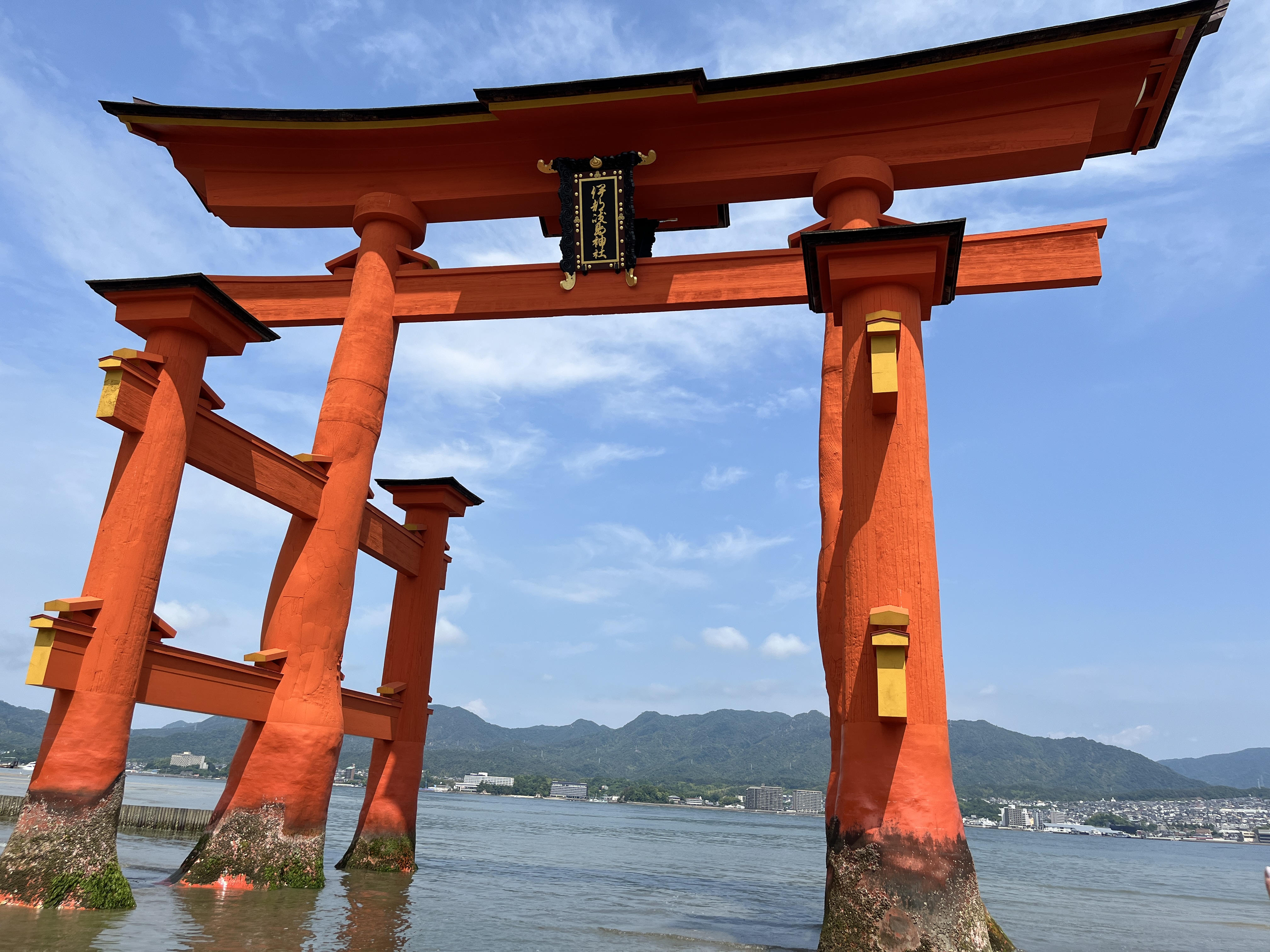
The Ōtorii (大鳥居) is not floating. It stands on legs embedded in the seabed. What makes it appear to float is something simpler and more carefully engineered: at high tide, the water rises to the base of the gate and conceals its legs entirely.
The current gate is the eighth iteration, built in 1875. It is 16 meters tall and stands approximately 160 meters offshore. The four main legs are made from camphor wood—specifically chosen because camphor is naturally resistant to seawater. The wood was selected from trees in Yamaguchi and Kagoshima prefectures over a period of years, waiting for specimens of sufficient size and quality. The gate was not built quickly or cheaply.
Tide timing matters: High tide produces the “floating” effect that appears in photographs. Low tide reveals the gate’s legs and allows visitors to walk out across the exposed seabed and stand beneath it—a completely different, more personal experience. Neither version is definitively “better.” They are simply different relationships with the same object.
The Japan Meteorological Agency publishes tide tables. Check them before you visit and decide which experience you want.
Itsukushima Shrine: Architecture Over Water
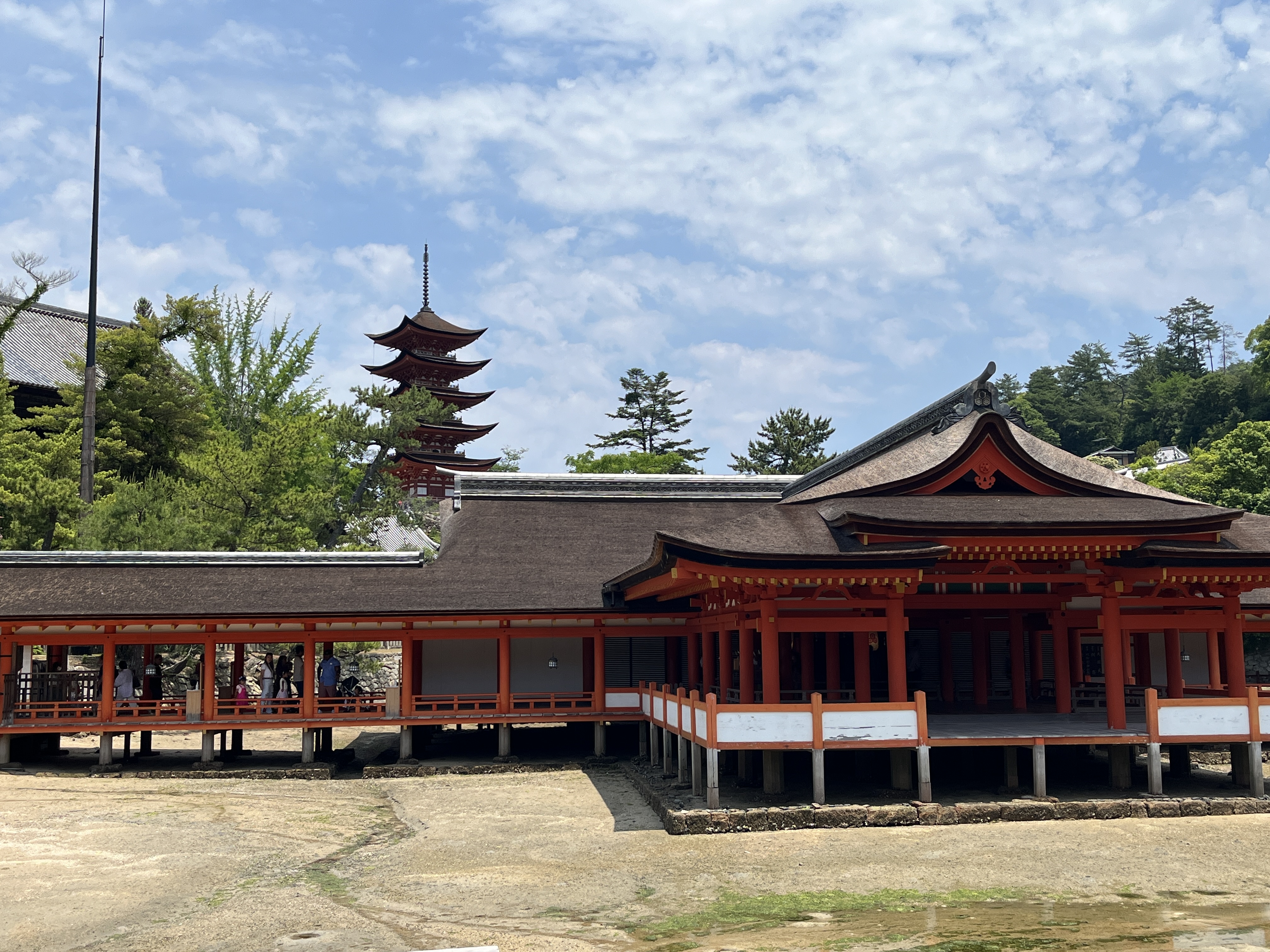
Itsukushima Shrine (厳島神社) is built on stilts extending over the tidal flat. At high tide, the shrine appears to float above the water alongside the torii gate. The buildings—vermilion-lacquered wooden corridors, offering halls, a stage for bugaku court dance performances—stretch in an L-shape that was designed to be approached by boat.
The shrine’s oldest structures date to 593 AD, though what currently exists dates primarily to the 12th century when Taira no Kiyomori, the most powerful man in Japan at that moment, undertook a massive renovation. Kiyomori used the shrine as his personal symbol and poured extraordinary resources into it. He was also, by most accounts, a deeply complicated figure—brilliant, ruthless, and eventually destroyed by overreach. The shrine he patronized outlasted his dynasty by 800 years.
Walk slowly through the covered corridors. The water visible through the gaps in the floorboards, the reflection of the lacquered railings, the distant sound of the tide—this is an experience of space that no land-based architecture can replicate.
The Sacred Deer: Why You Shouldn’t Feed Them
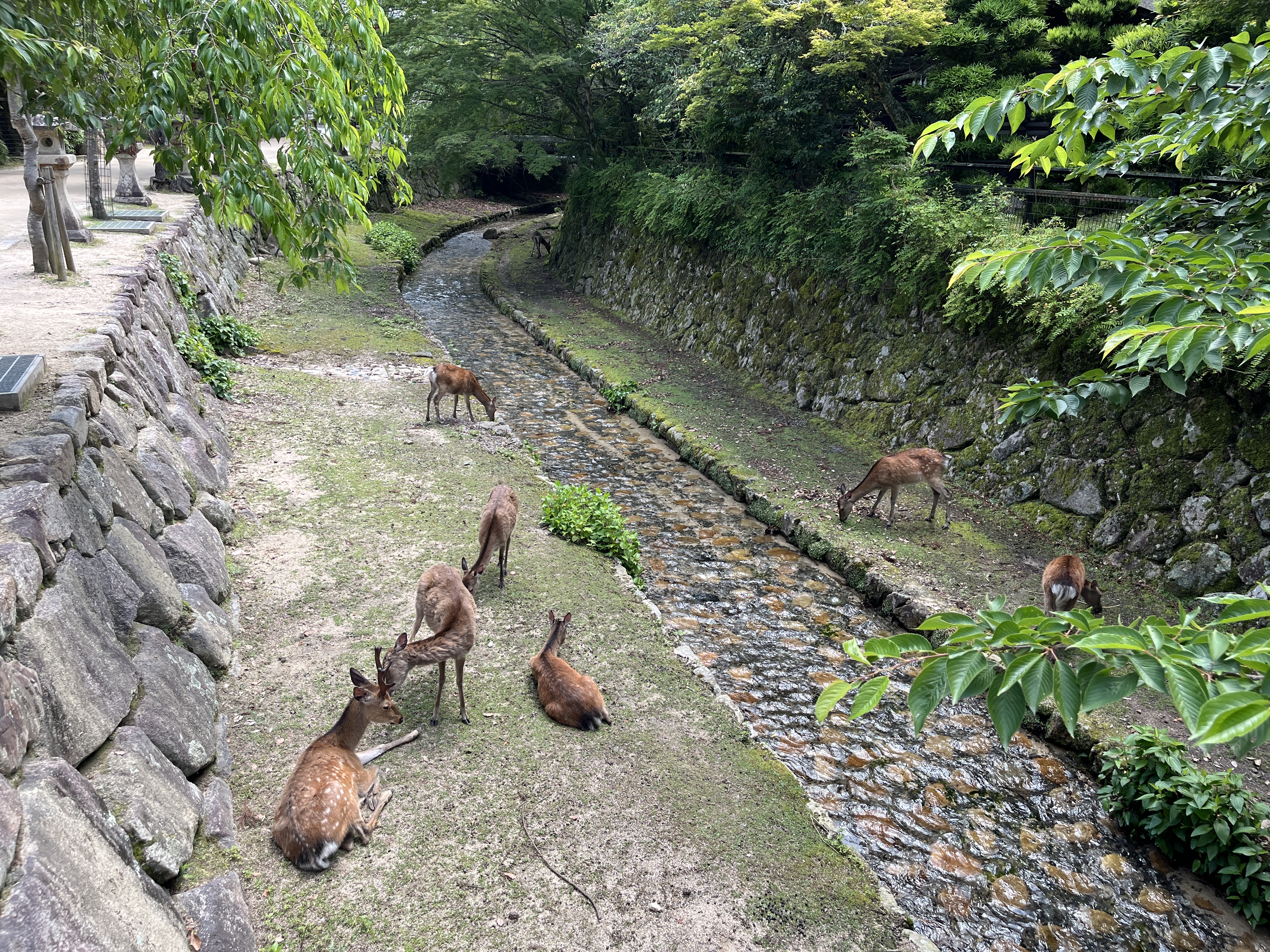
The deer of Miyajima are widely described as “friendly.” A more accurate description is “bold and strategic.” They have learned that tourists carry food, and they will calmly remove a map, a snack, or an unguarded bag from your possession without hesitation or apology.
These deer are shika (鹿)—sacred to Shinto, specifically to the Kasuga Shrine tradition in which deer serve as divine messengers. On Miyajima, the policy of not feeding them serves both religious and ecological purposes: deer that rely on human food become unwell, and their sacred status means they cannot be easily managed when they become a problem.
Do not feed them. Admire them. They have been here longer than the tourists.
Mount Misen: The Sacred Peak Most Visitors Skip
Mount Misen (弥山, 535 meters) is the spiritual core of Miyajima in a way the shrine often overshadows. The monk Kūkai (Kōbō Daishi)—the founder of Shingon Buddhism and arguably the most important religious figure in Japanese history—is said to have practiced austerities here in 806 AD and lit a sacred fire that has burned continuously ever since.
That fire, at the summit’s Reikado Hall, has been burning for over 1,200 years. The flame is said to be the same one Kūkai originally lit. It is used to light the Flame of Peace in Hiroshima’s Peace Memorial Park—a connection between Miyajima’s ancient sacred fire and postwar Japan’s prayer for peace that most visitors never learn.
You can reach the summit by ropeway (two stages, with a 30-minute hike from the upper station) or entirely on foot via three different trails (approximately 2–2.5 hours). The summit offers views across the Seto Inland Sea—the body of water that connects Honshu, Shikoku, and Kyushu, dotted with hundreds of islands. This is one of the great landscape views in Japan, and entirely few foreign visitors reach it.
Staying Overnight: The Island After the Day-Trippers Leave
The vast majority of visitors arrive from Hiroshima on the first morning ferry and leave on the last afternoon ferry. This is entirely understandable and also, from the perspective of experiencing what Miyajima actually is, a significant mistake.
After 5 PM, the day-trippers are gone. The shopping street closes. The streets empty. And the island becomes what it was designed to be: a quiet, slightly otherworldly place where the deer move through the dark streets and the illuminated torii gate reflects on the water and the forest makes sounds that the daytime crowd covered.
Staying in a traditional ryokan on Miyajima overnight means waking before the first ferry arrives and walking to the shrine in the early morning light with almost no other people present. The priests are conducting morning rituals. The deer are moving through the approach paths. The shrine is doing what it was built to do, not what it performs for visitors.
Book a ryokan well in advance. They fill up months ahead, particularly for autumn foliage season.
What to Eat: Three Dishes with Local Meaning
Momiji manju (もみじまんじゅう) — Maple-leaf-shaped cakes filled with sweet bean paste, cream, or chocolate. These were invented in the early 20th century specifically for Miyajima visitors and have become one of the most recognized regional sweets in Japan. The bakeries near the ferry terminal make them fresh throughout the day. The warm ones are distinctly better.
Oysters (牡蠣) — Hiroshima Bay produces a significant portion of Japan’s oysters, and Miyajima’s restaurants serve them grilled, fried, in rice, or raw. In winter, they are at peak size and richness. The fried oysters (kaki furai) sold on the shopping street are among the best available anywhere in Japan.
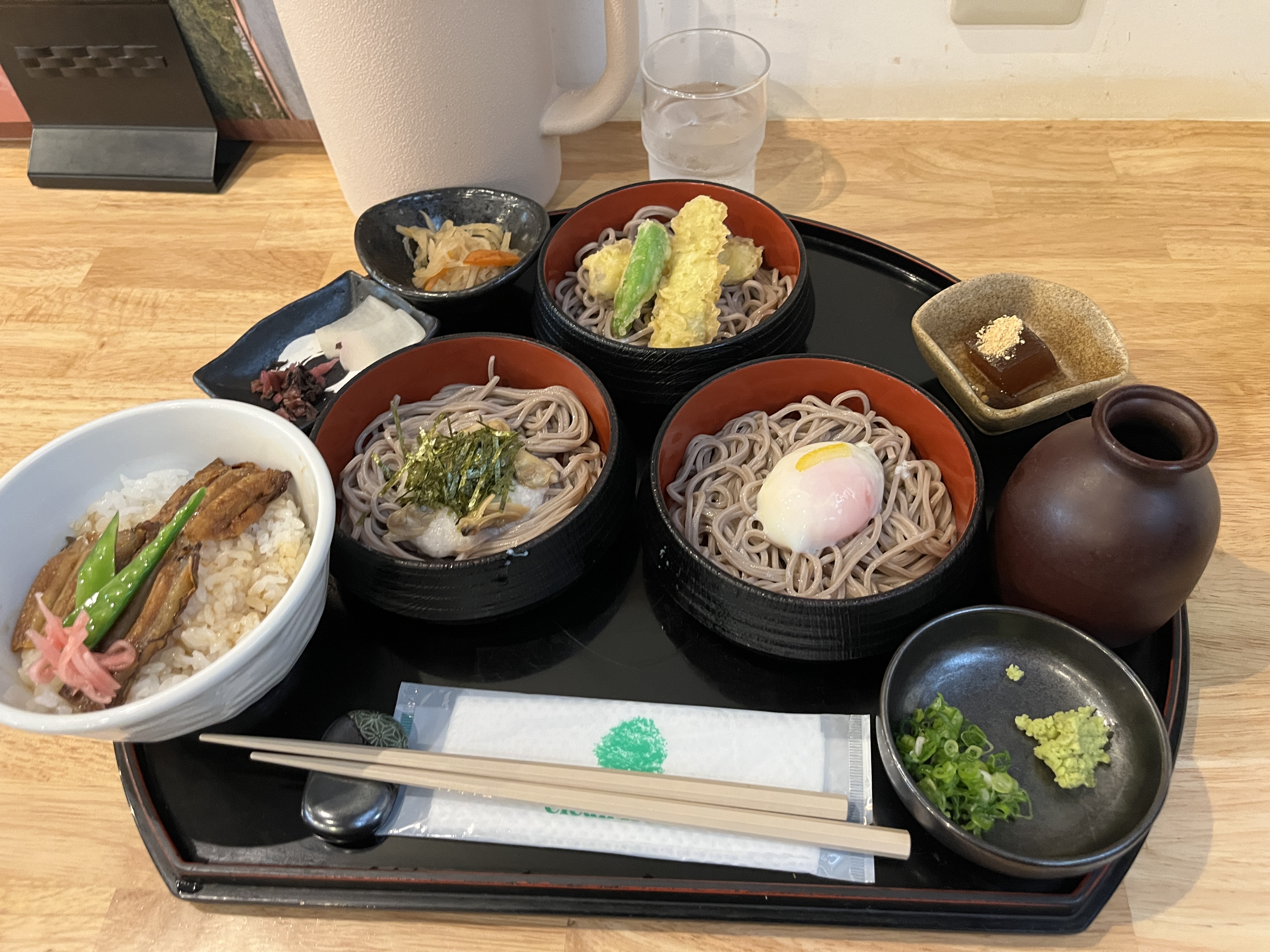
Anago meshi (あなごめし) — Grilled conger eel over rice, a Miyajima specialty that differs from the more famous unaju (freshwater eel) in flavor: lighter, less fatty, more delicate. The dedicated anago restaurants near the ferry terminal have been operating this dish for over 100 years.
Practical Information
- Access: From Hiroshima Station: JR Sanyo Line to Miyajimaguchi (25 min) → 10-min ferry
- Best time: November for autumn foliage; January for thin crowds and winter calm; spring for cherry blossoms around the shrine
- Tides: Check tidal charts before visiting to choose your preferred experience (floating effect vs. walking to the gate)
- Ropeway: Operates 9 AM–5 PM; last return 5:30 PM; ¥1,840 adults round trip
- Overnight stays: Ryokan rates typically ¥20,000–¥50,000 per person with dinner and breakfast; book 2–3 months ahead
An island maintained as sacred for 1,400 years cannot be fully understood in four hours. Give Miyajima the time it was designed to require—an overnight stay at minimum—and it will give you something that most famous Japanese destinations cannot: the genuine feeling of having been somewhere outside ordinary time.