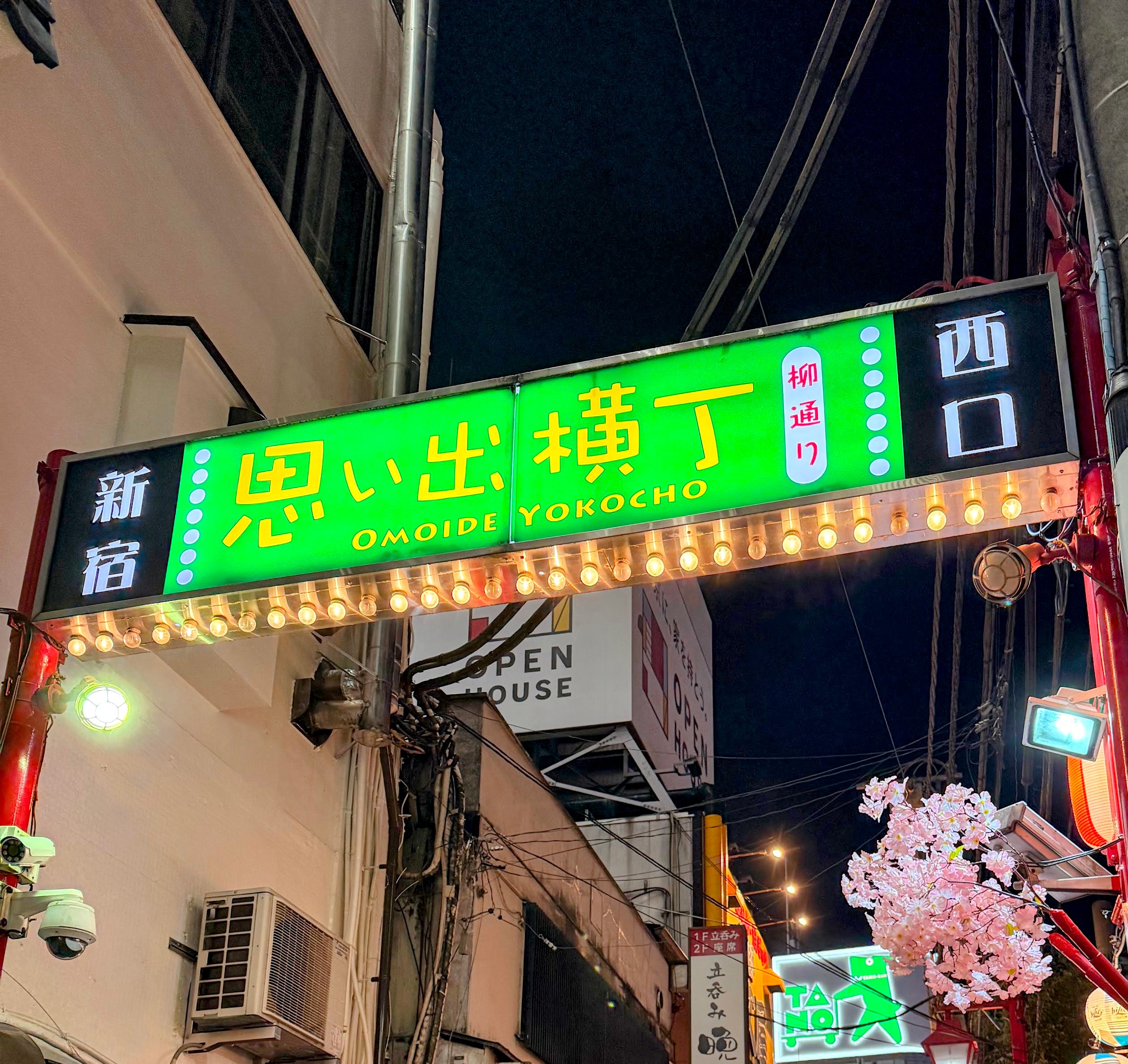
The Alley That Refused to Become Modern
Shinjuku has 3.5 million people passing through it every day. Somehow, in the middle of all that, a 200-meter alley from 1946 is still standing.
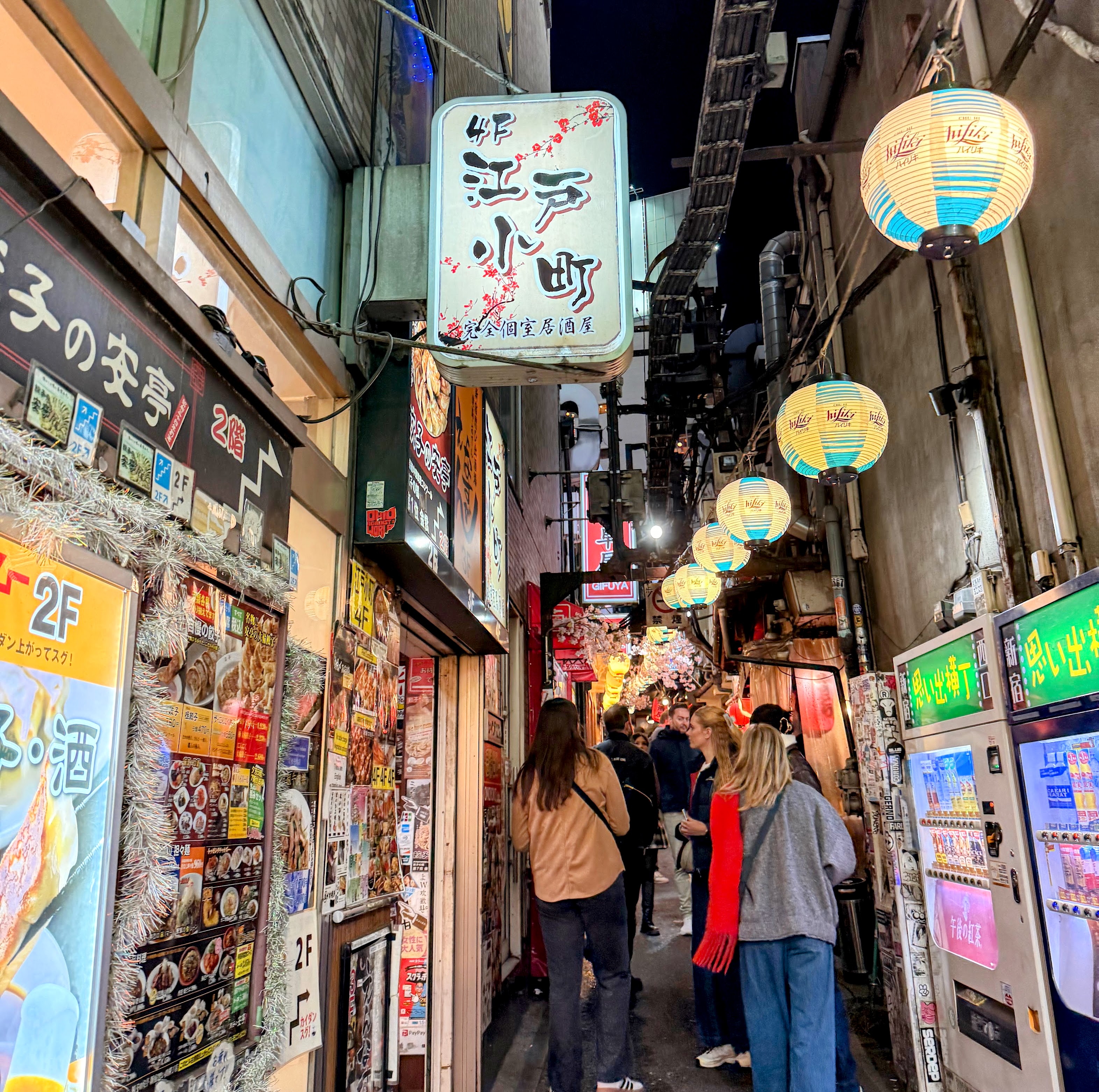
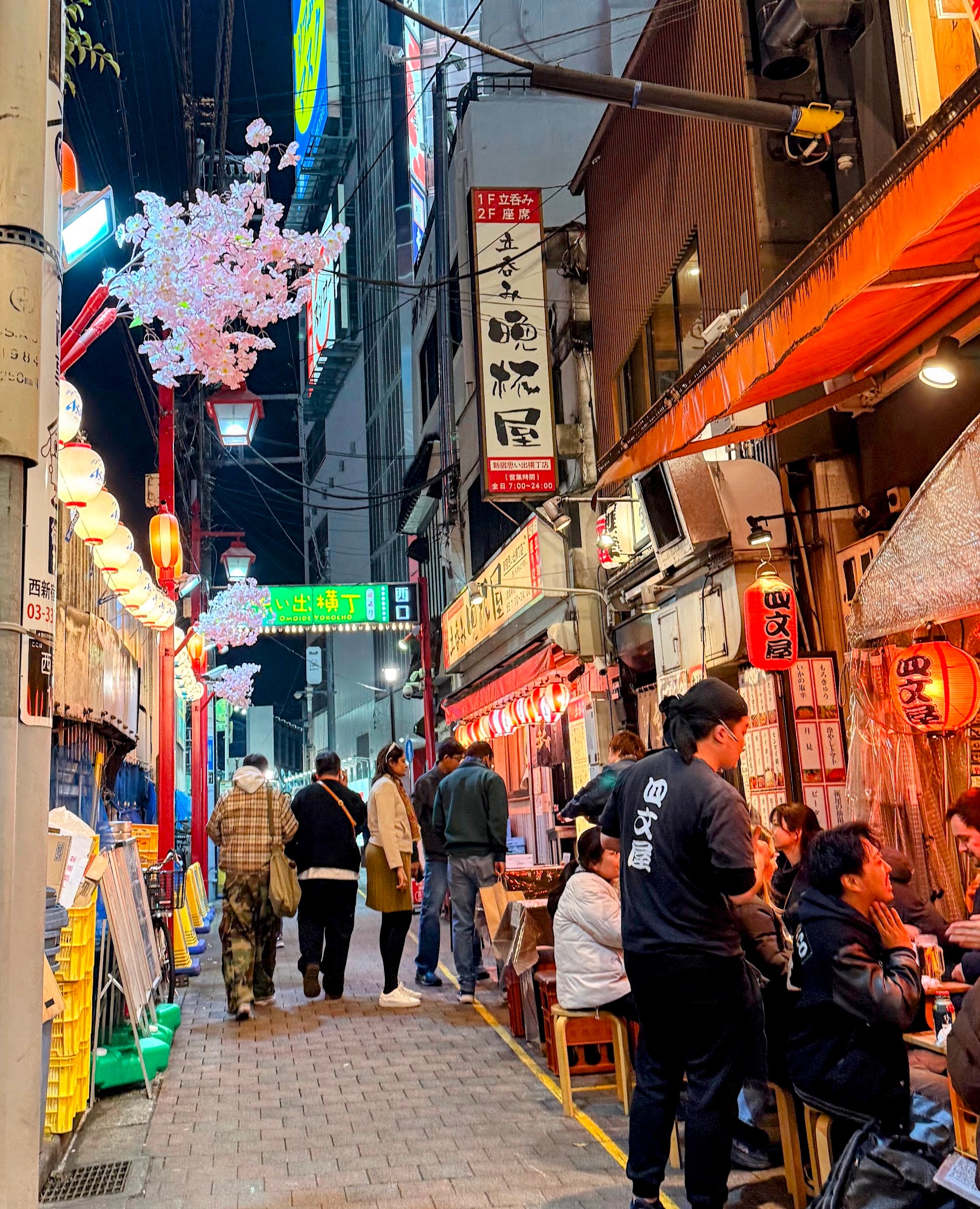
Omoide Yokocho — Memory Lane — sits directly behind the west exit of Shinjuku Station, wedged between a highway overpass and a building that probably costs ¥800,000 a month to lease. About 60 stalls share walls so thin you can hear the conversation at the next table. Red lanterns. Charcoal smoke. The smell of chicken offal and miso hitting heat at the same time.
It has no business existing in 2025. That’s why it matters.
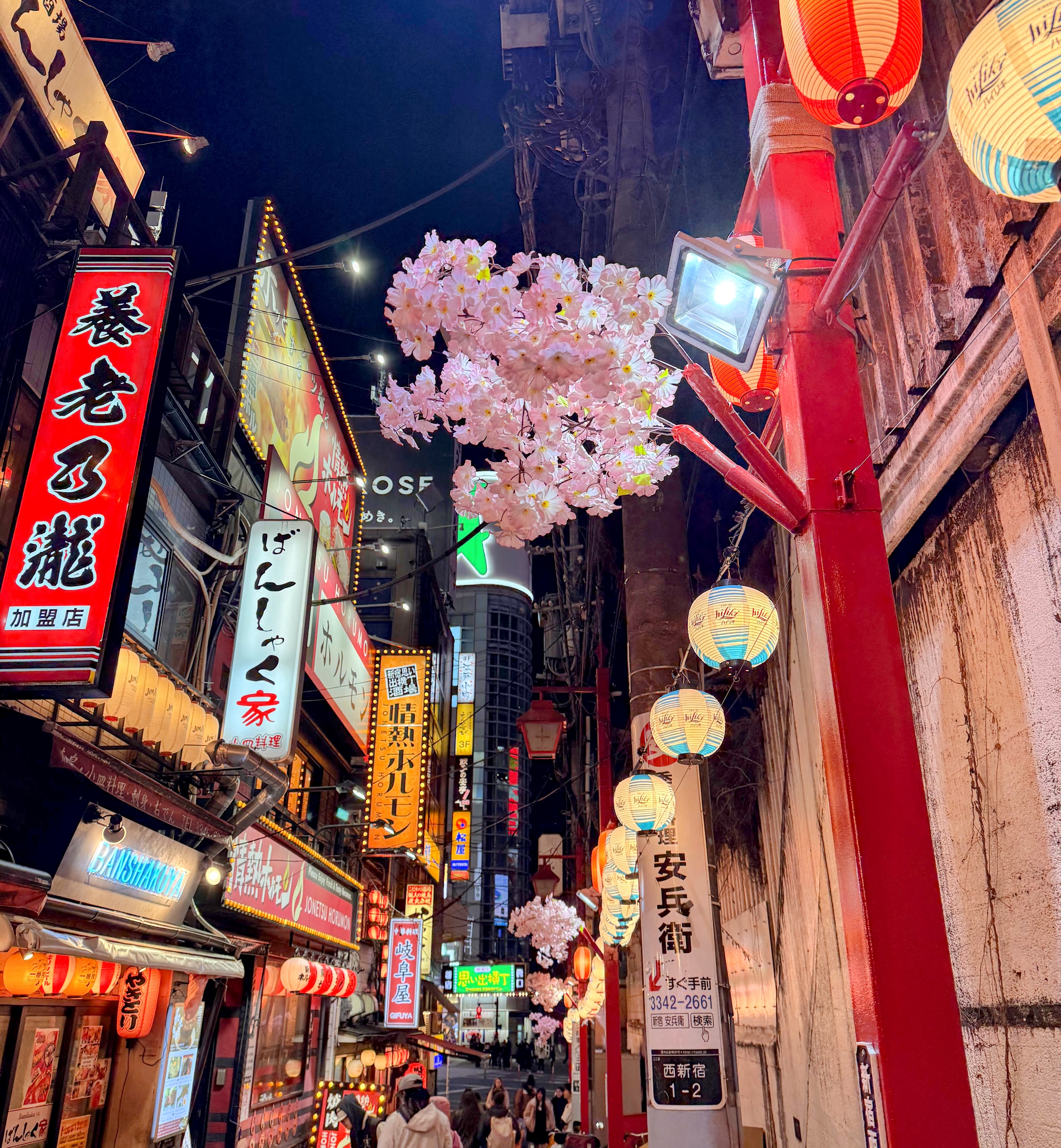
Why It Smells Like That
After Japan’s defeat in 1945, the west side of Shinjuku Station was ash. What grew in the rubble was a black market called Lucky Street — unlicensed stalls selling whatever could be sourced when almost nothing could be sourced. Wheat flour was controlled. Beef was controlled. Pork intestines, inexplicably, were not.
That bureaucratic oversight is why motsu — offal — became the signature dish of this alley and never left. The glistening yakitori skewers turning over charcoal right now are a direct line back to a city figuring out how to feed itself. Most of the people eating them don’t know that. The flavor doesn’t require the history. But the history is in every bite.
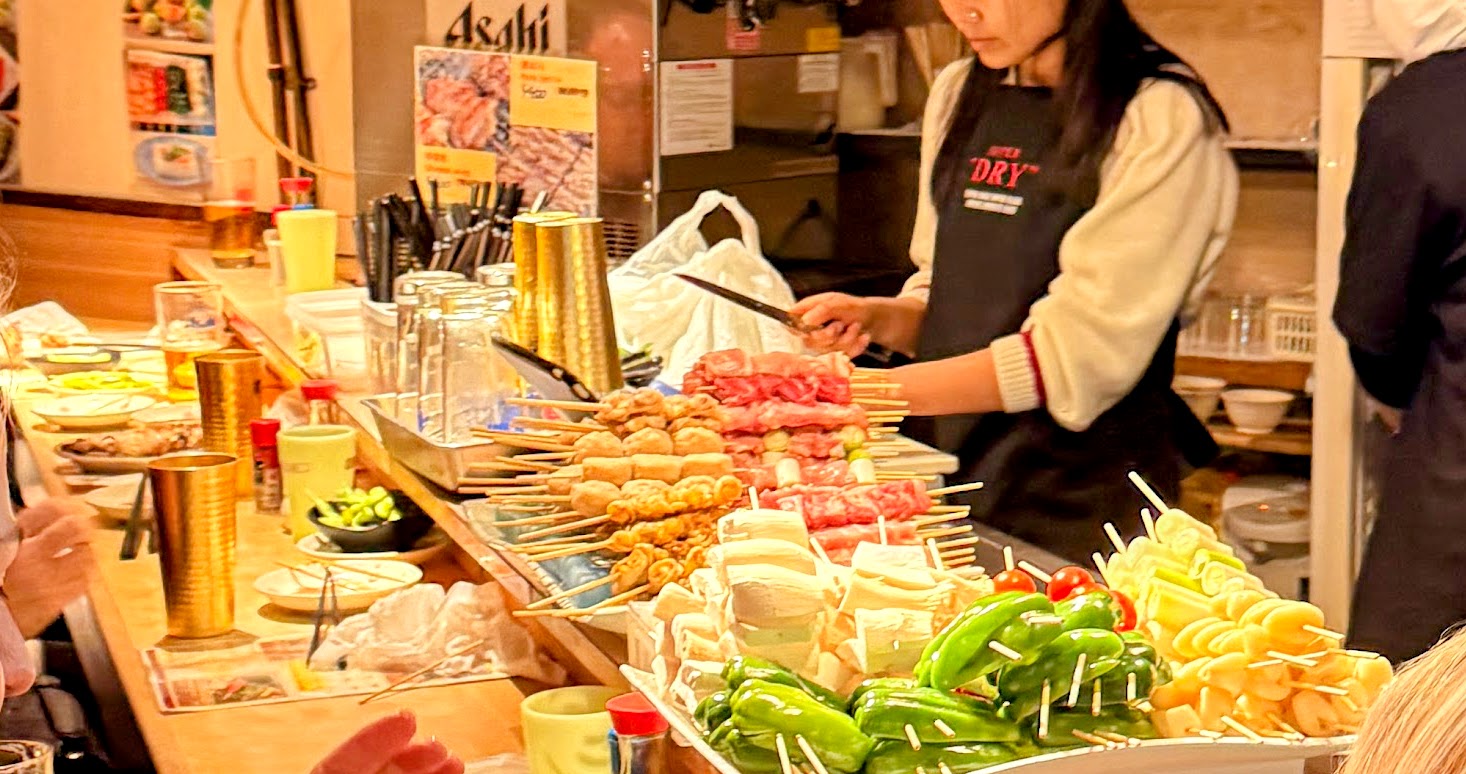
How It Actually Works
Six things worth knowing before you duck under the first noren:
Cash only at roughly 60% of stalls — the ATM in the nearby convenience store is your friend. Some of the busier counters have a 3-drink limit or a 90-minute rule; this isn’t hostility, it’s the owner thinking about the people waiting in the rain outside. The shared toilet in the central passage was renovated in 2021 and is fine. Seat yourself if there’s space — no one will seat you. Order quickly — the staff are moving constantly. And hashigo (bar-hopping, 2 or 3 stalls in a single evening) is the correct way to experience the alley, not a compromise.
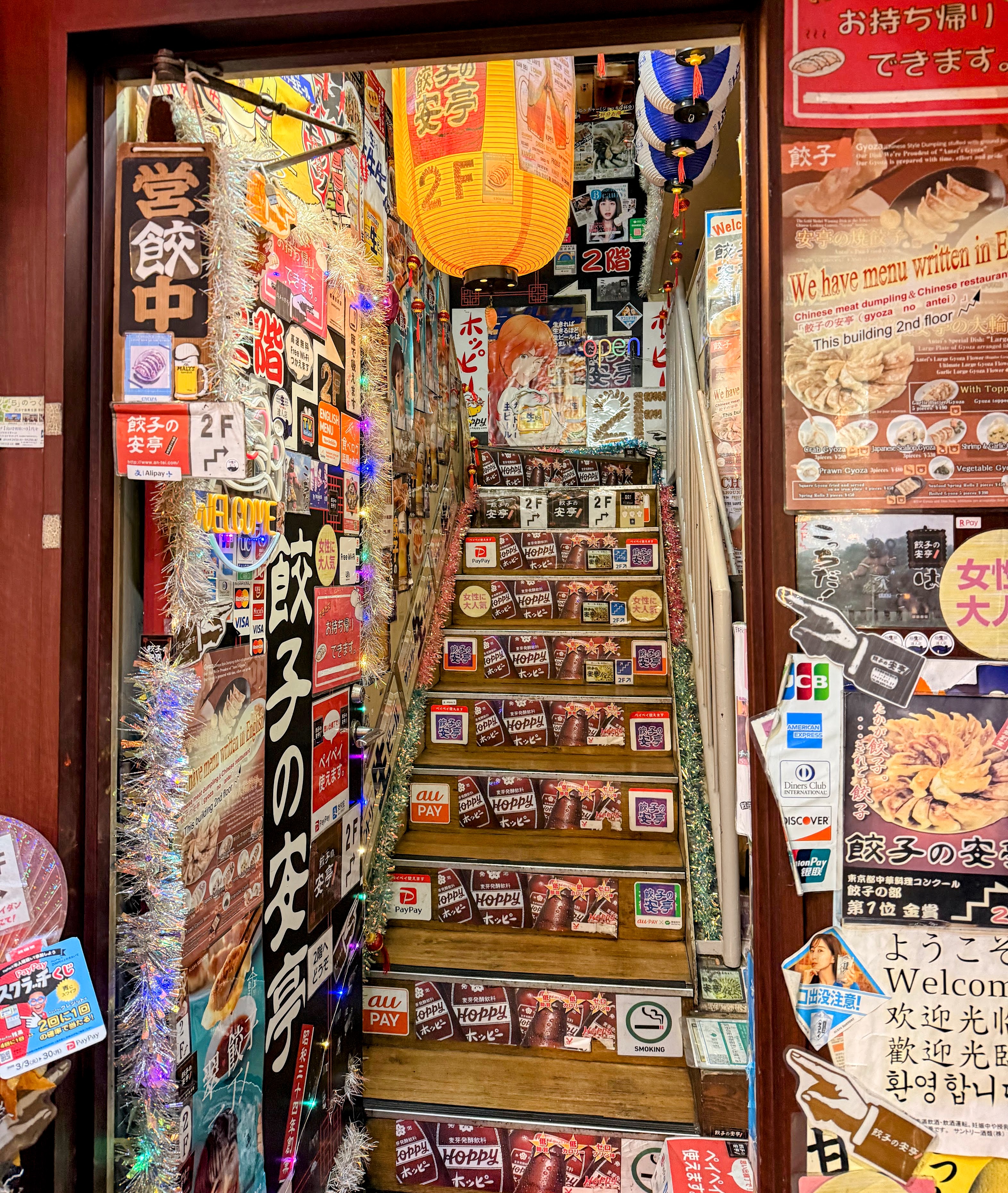
Two counters worth lining up for:
Ucchan is the most frequently mentioned yakitori stall in the alley and earns it. The harami skewer is larger than it has any right to be. Arrive 10 minutes before the 4pm open if you want to avoid the line that forms before the grill is warm.
Gifu-ya is the Chinese counter that runs from 9am to near midnight — an almost absurd operating window that means it functions simultaneously as a lunch spot, afternoon refuge, and late-night anchor. The kikurage egg stir-fry and the fried rice are both worth ordering. The large-bottle Sapporo is colder than it needs to be, which is exactly right.
What the Alley Is Actually Doing
There’s a version of this story that romanticizes Omoide Yokocho as a survivor, as proof that old Tokyo persists against the forces of development. That reading is too easy.
The alley persists because the land it sits on is complicated, the tenant relationships are old and layered, and — most importantly — it generates significant revenue exactly as it is. Sentiment didn’t save it. Economics did, at least partly.
That’s a more interesting story. The city didn’t preserve Memory Lane out of nostalgia. Memory Lane just kept being useful.
There’s something clarifying about standing in smoke at a counter the width of your shoulders, eating offal on a stick in a space that’s been absorbing this kind of evening for 80 years. Tokyo is not sentimental. It just moves slowly enough in certain places that the past hasn’t been priced out yet.
Go while that’s still true.
The Practical Layer
Nearest exit: Shinjuku Station West Exit (JR/Metro), 2-minute walk. The alley runs parallel to the elevated tracks — look for the red lanterns, you won’t miss it. Budget ¥2,000–3,500 per person for two stalls and enough drinks to linger. Peak hours are 7–9pm on weekdays; Friday and Saturday fill by 6:30.