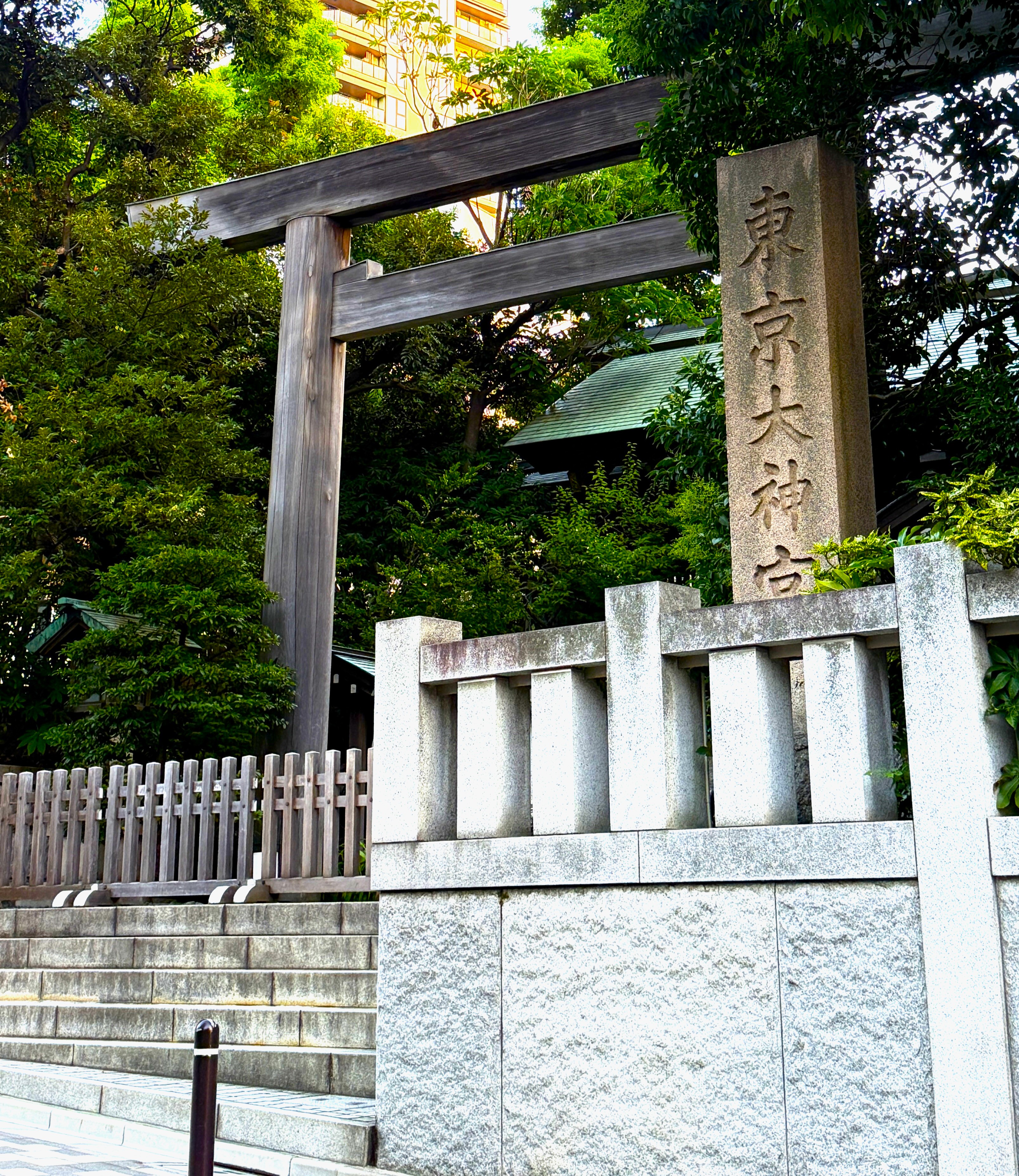
Most visitors to Tokyo Daijingu come because they read it’s a “love shrine.” That framing is accurate but incomplete. The shrine is worth understanding on its own terms before you arrive — because what happened here in 1900 shaped how millions of Japanese people get married.
What Makes Tokyo Daijingu Worth Visiting
It held the first modern Shinto wedding in Japan
Tokyo Daijingu was established in 1880 as a branch of Ise Jingu — Japan’s most sacred shrine complex in Mie Prefecture — specifically so Tokyo residents could worship the same deities without the journey. At the time, travel to Ise was a multi-week undertaking. The branch shrine made that connection accessible in the capital.
Twenty years after opening, in 1900, the shrine hosted a wedding ceremony for the Crown Prince — the first formal Shinto wedding ceremony in Japanese history. Before this, marriages in Japan were conducted as private household events, not religious ceremonies. What was established here as a court ritual gradually filtered outward, and by the postwar period, the Shinto wedding ceremony had become the dominant form of marriage observance across the country.
The ceremony format used in wedding halls and shrines across Japan today traces directly to what was formalized here.
The deities here govern connection, not just romance
The shrine is dedicated to Amaterasu-Omikami and Toyouke-no-Omikami — the same deities enshrined at Ise — alongside Musubi-no-Kami, the deity of connection and creation. En-musubi (縁結び) is the Japanese concept of binding together people and opportunities, and it extends beyond romantic relationships: career connections, friendships, timing. The shrine’s association with romantic luck is the popular version of a broader concept.
That said, the concentration of young women visiting on weekday afternoons to buy koi-mikuji (love fortunes) is a real phenomenon, and the shrine has leaned into it. The Suzuran Mamori charm — shaped like lily of the valley — is one of the more requested items at the shrine office.
Getting There
Nearest station: Iidabashi Station — 5-minute walk.
- JR Chuo-Sobu Line: East Exit, then north on the main street
- Tokyo Metro Yurakucho / Namboku / Tozai Lines: Exit B2a or B3, same walking direction
- Toei Oedo Line: Exit B2a
The shrine sits on a quiet residential side street off Iidabashi’s main commercial strip. It is not visible from the main road — first-timers often walk past the turn. Look for the torii gate set back from the street on Fujimi-dori.
What to Expect
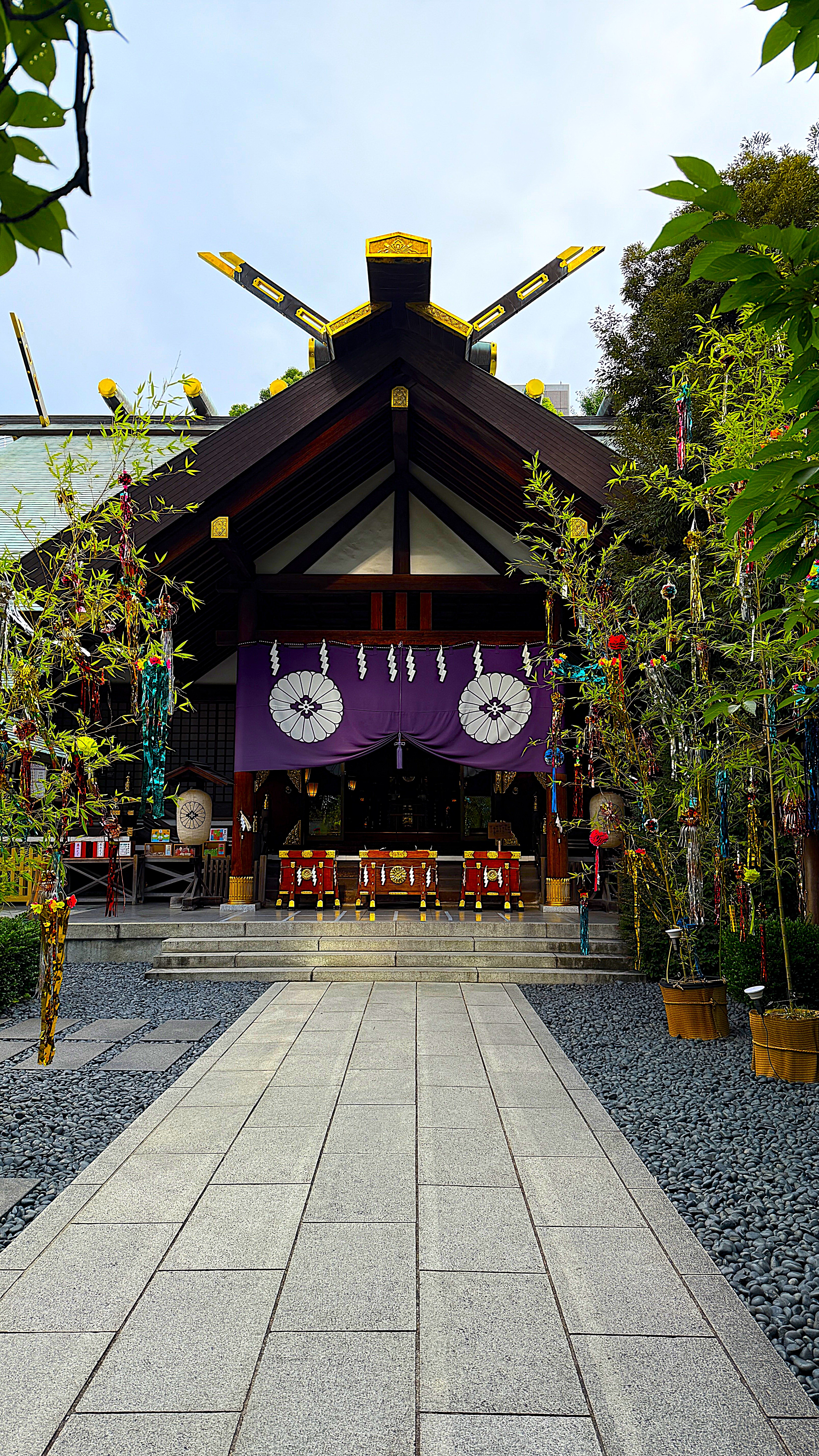
The grounds are compact — this is not a sprawling complex like Meiji Jingu or Yasukuni. The main hall, shrine office, and a small courtyard fill the site. On weekdays it is calm enough to hear the water basin. On weekends during cherry blossom season, the narrow approach fills with visitors and the queue for charms extends to the gate.
Shrine etiquette is the same here as at any Shinto shrine: rinse hands at the temizuya water basin (left hand first, then right, then rinse your mouth), approach the main hall, toss a coin (¥5 is traditional — the word go-en means both “five yen” and “good connections”), bow twice, clap twice, pray, bow once more.
The omikuji (fortune slips) at Tokyo Daijingu have a reputation for specificity. The koi-mikuji variant gives relationship-specific guidance, including an assessment of current prospects. Whether you take this literally is your business. The ritual of reading it, folding it, and tying it to the wire rack outside if the fortune is unfavorable is worth doing for the form of it.
Local Tips
Visit on a weekday morning The shrine’s surrounding neighborhood is a quiet office district. Weekday mornings before 10 AM, the grounds are nearly empty. Weekends attract couples, groups of women visiting together, and occasional wedding parties using the facilities — all legitimate uses of the space, but not what you want if you came for quiet.
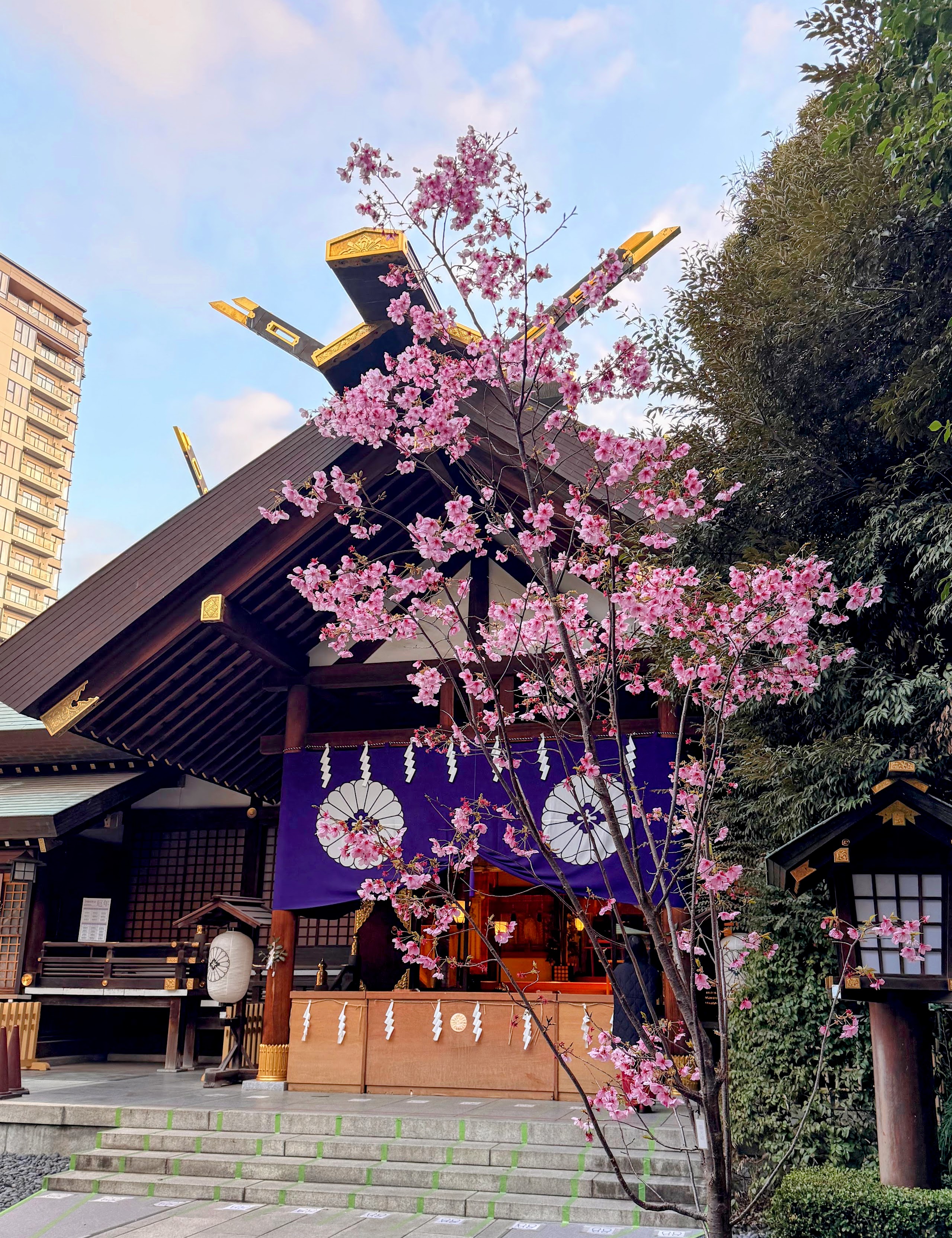
Cherry blossom timing The shrine’s interior courtyard has several small trees that bloom in late March. Because the space is enclosed and the scale is intimate, the effect is disproportionate to the number of trees. It photographs well and it is genuinely pleasant — but it is also when the crowds peak. Arrive before 9 AM if you’re going during blossom season.
The charm office has seasonal items The shrine releases limited charms at certain times of year. The standard Suzuran Mamori is available year-round, but the seasonal variations sell out. If you’re visiting with something specific in mind, check the shrine’s official site before going.
Practical Info
| Item | Detail |
|---|---|
| Address | 2-4-1 Fujimi, Chiyoda-ku, Tokyo |
| Nearest station | Iidabashi (JR / Tokyo Metro / Toei) — 5-min walk |
| Hours | Grounds: always open / Shrine office: 8:00–19:00 |
| Admission | Free |
| Charms (omamori) | ¥500–¥1,000 depending on type |
| Best time to visit | Weekday mornings / Late March (cherry blossom, arrive early) |
| Avoid | Weekend afternoons, Golden Week |
| Time needed | 30–45 minutes |