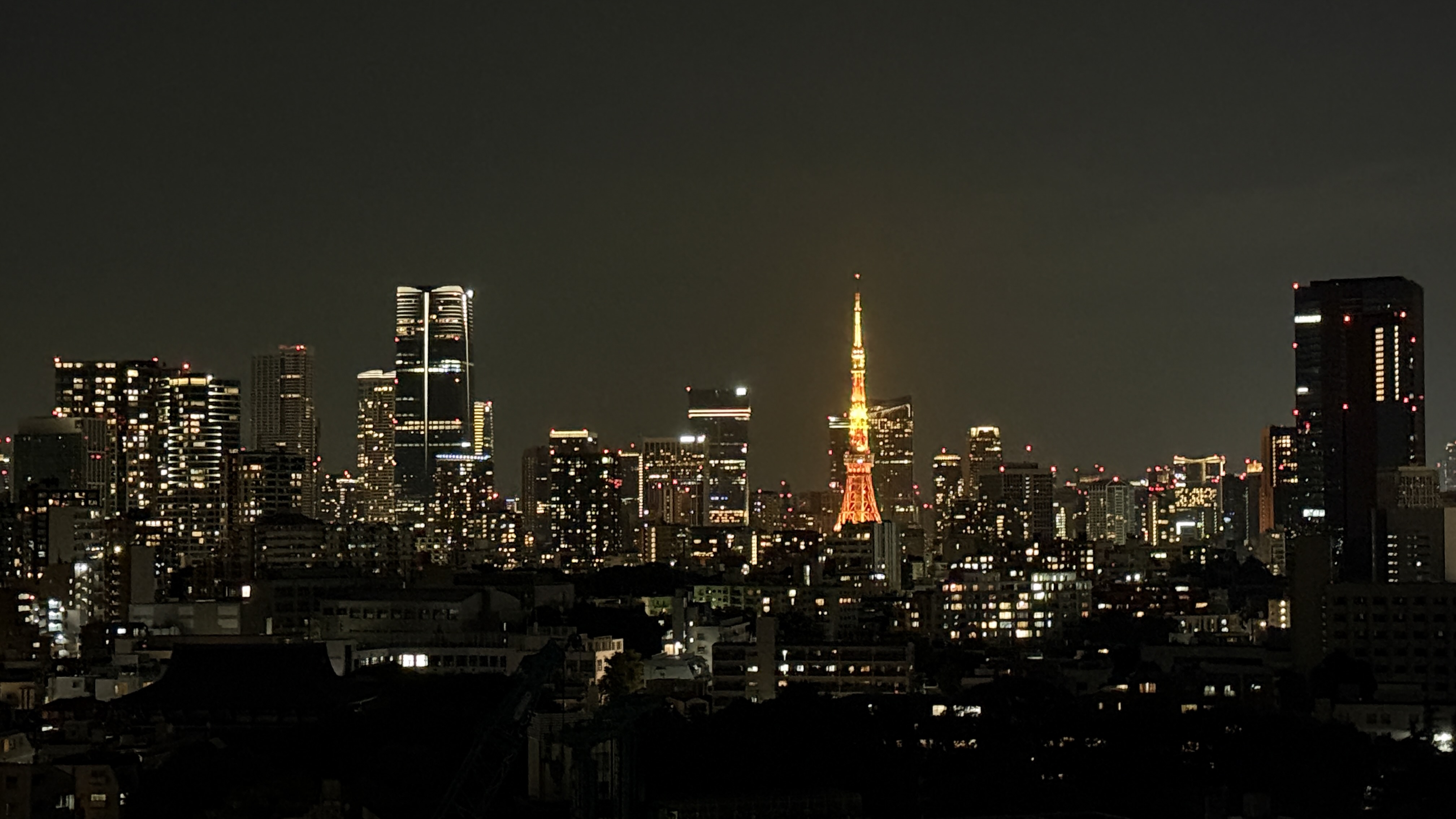
People who follow Tokyo travel trends often recommend the Skytree over Tokyo Tower. It’s taller, newer, has better technology, and offers broader views. On paper, they’re right.
They’re also missing the point.
Tokyo Tower (東京タワー) is not competing with the Skytree. It is doing something the Skytree cannot do—something that requires not height or modernity but age and context. To understand why, you need to understand what Japan was in 1958, and what this tower meant to the people who watched it being built.
1958: The Year Japan Needed to Prove Something
Japan in 1958 was thirteen years out of the most devastating defeat in its history. The firebombings had erased entire cities. Tokyo itself had been reduced to rubble. The American occupation had ended only six years earlier. The question hanging over the country was not philosophical—it was existential: Can we come back from this?
Tokyo Tower was the answer made physical.
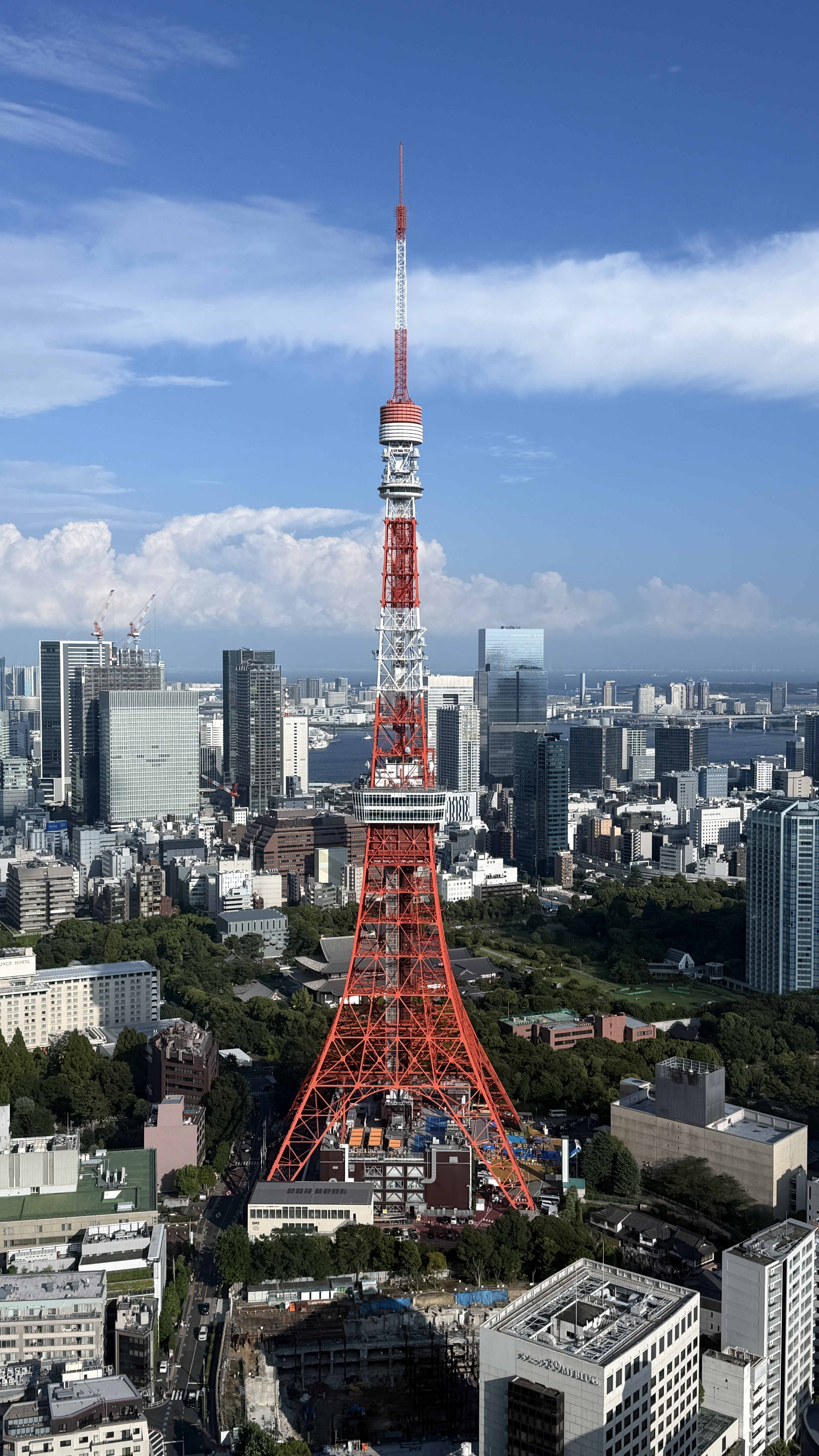
At 333 meters, it surpassed the Eiffel Tower—the structure it was consciously modeled on—by 9 meters. It was built in 18 months. It was constructed almost entirely with scrap metal from American tanks destroyed in the Korean War. Japan had taken the machines of a conflict it barely survived, melted them down, and turned them into a symbol of recovery. You cannot manufacture that kind of meaning. It accumulates over decades and generations.
Every Japanese person who grew up in the postwar era understands this, even if they’ve never articulated it. Walking toward Tokyo Tower is, for many older Japanese people, a mild form of time travel back to when the future felt possible again.
What You See from the Observation Decks
The Main Deck sits at 150 meters—high enough to render Tokyo’s extraordinary horizontal sprawl legible. Unlike many global megacities, Tokyo has no single dominant visual center; it spreads in every direction without obvious pattern. From 150 meters, you begin to understand why: the city grew organically, neighborhood by neighborhood, absorbing smaller towns and villages, each with its own character. You can pick out the dark rectangle of the Imperial Palace grounds, the cluster of towers in Shinjuku to the west, the bay to the south.
The Top Deck at 250 meters adds distance but subtracts detail. On the clearest winter days—typically January mornings after a cold front has swept the air clean—the unmistakable cone of Mount Fuji appears on the western horizon. A mountain 100 kilometers away, framed by the urban skyline. If you see this, you will understand why Japanese aesthetics treat the juxtaposition of culture and nature not as contrast but as completion.
The Zojoji Composition: Tokyo’s Most Underrated View
Here is what almost nobody tells you about Tokyo Tower: the best view of it is from the ground, not from within it.
Walk south from the tower to Zojoji Temple (増上寺), the great Tokugawa-era Buddhist temple that has stood here since 1393. Position yourself in the temple courtyard looking north. The red-and-white tower rises directly behind the temple’s massive sanmon gate. Ancient wood and modern steel in the same frame, neither diminishing the other.
This is the composition that professional photographers come for. It is freely accessible. Most visitors to Tokyo Tower never see it because they go directly to the entrance and go up. Do the opposite: walk to Zojoji first, compose the shot you want, then buy your ticket.
Shiba Park, which surrounds the temple and tower, is worth a slow walk as well. The park is popular with local dog walkers, retired couples, and businesspeople eating lunch on benches. Nobody is performing for tourists. It’s simply a park in the city, which is its own kind of rare and valuable thing.
Daytime vs. Evening: Two Different Towers
Daytime reveals the tower’s engineering. The lattice structure—a triangular grid in Pratt truss configuration—is visible in its full complexity. What looks like decorative patterning from a distance is, up close, pure structural logic: the geometry that allows 4,000 tons of steel to distribute wind loads without twisting. The orange and white paint scheme exists not for aesthetics but for aviation safety regulations. Japan turned a regulatory requirement into a visual identity.
Evening is when the tower transforms. The illumination changes seasonally: white in winter, soft orange in spring, gold in autumn. The surrounding low-rise neighborhoods of Minato-ku—still home to embassies, old foreign residences, and Japanese-style townhouses—absorb the glow and reflect it back. Tokyo Tower at night is not spectacular in the way Times Square is spectacular. It is warm in a way that feels almost residential, as if the tower is a very tall lamp in someone’s living room.
The view from the tower at night—the entire Kanto plain reduced to a scatter of light that extends to the horizon in every direction—is one of those views that stops internal monologue completely. You just stand there and look.
Why Tokyo Tower Feels Different from Modern Observation Towers
Modern observation towers are designed for throughput and revenue: fast elevators, timed tickets, gift shops at the exit. The experience is efficient and optimized but ultimately thin. Tokyo Tower still has the slightly worn, slightly imperfect quality of a structure that has been used for decades—by families, by couples on first dates, by school groups, by businesspeople entertaining foreign clients.
There are regular visitors who have been coming here since the tower opened in 1958. The building has absorbed their presence over sixty-seven years. This is not something that can be designed or marketed. It is what the Japanese call natsukashii (懐かしい)—a bittersweet nostalgia for something you may not have personally experienced, but which the culture carries in its memory.
Practical Information
- Access: Akabanebashi Station (Toei Oedo Line), 5-minute walk; Kamiyacho Station (Hibiya Line), 7-minute walk
- Main Deck (150m): ¥1,200 adults; ¥700 children
- Top Deck (250m): ¥3,000 adults (includes Main Deck access); advance booking recommended
- Hours: 9:00 AM – 11:00 PM (last entry 10:30 PM)
- Best timing: Clear winter mornings for Mt. Fuji views; blue hour (30 minutes after sunset) for the most photogenic exterior
Tokyo Tower could have been demolished when the Skytree opened in 2012. There was a real debate about whether it was still necessary. The debate ended quickly. Japan kept the tower—not because it was practical, but because some things are worth preserving simply for what they mean. That decision tells you something important about how Japan relates to its own history.