Most people passing through the Hokuriku region stop at Kanazawa and keep moving. Toyama, the next prefecture east along the Shinkansen line, doesn’t have Kenrokuen or a geisha district to anchor the itinerary. What it has instead is more specific: one of Japan’s most dramatic mountain routes, a bay that produces seafood serious enough to warrant its own category of sushi, and a gorge that most people outside Japan have never heard of.
That’s the case for going.
What Makes Toyama Worth Visiting
The snow walls at Tateyama are not like anything else in Japan
The Tateyama Kurobe Alpine Route runs 37 kilometers across the Northern Japan Alps, connecting Toyama with Nagano via a sequence of cable cars, ropeways, and buses. It is open from mid-April through mid-November, and the reason to go in late April is the snow walls.
After a Toyama winter, the roads through the alpine zone are buried under 15 to 20 meters of snow. When the route reopens each spring, plows carve a corridor through the snowpack — and for a few weeks, visitors walk between walls of compressed snow taller than a three-story building. The sky is a strip above you. The walls are close enough to touch.
This is not a metaphor. It’s a road.
Toyama Bay has its own tidal current and its own fish
The bay sits at the meeting point of deep cold water and warm surface currents, which produces a concentration of marine life unusual for Japanese coastal waters. White shrimp (shiro-ebi) is found almost nowhere else in the world. Firefly squid (hotaru-ika) wash ashore at Namerikawa in spring in quantities large enough to turn the water luminescent at night.
The local style of sushi — pressing marinated trout over a bed of vinegared rice in a wooden mold, then slicing it — is called masu-zushi, and it has been made here for over 200 years. It is sold at Toyama Station as a bentō, packaged in round wooden boxes. Buy one before leaving. It travels well.
Kurobe Gorge is accessible by a small red train
Unazuki Onsen sits at the entrance to the Kurobe Gorge, one of Japan’s deepest. A narrow-gauge railway runs 20 kilometers along the gorge floor, past sheer cliffs, suspension bridges, and hot spring sources venting steam directly from the rock. The train was originally built to service a hydroelectric dam. It now carries visitors through terrain that would otherwise be inaccessible.
The onsen town itself is functional rather than atmospheric — a base for the gorge, not a destination in its own right. Stay a night if the timing works, but don’t build the trip around it.
Getting There
From Tokyo Hokuriku Shinkansen (Kagayaki or Hakutaka) from Tokyo Station to Toyama Station — approximately 2 hours 10 minutes. The fastest trains stop only at Omiya, Nagano, and Toyama.
From Kanazawa Hokuriku Shinkansen, 18 minutes. Toyama makes a logical extension of a Kanazawa trip — same line, short journey.
From Osaka / Kyoto Take the Thunderbird limited express to Kanazawa (approximately 2 hours from Osaka), then transfer to the Shinkansen for the final 18 minutes to Toyama. Total journey: approximately 2 hours 20 minutes.
Within Toyama The city tram (Toyama Light Rail) connects the station to the waterfront in under 15 minutes. For Tateyama, take the Toyama Chiho Railway from Toyama Station to Tateyama Station (approximately 1 hour), then the cable car up. For Unazuki Onsen, the same private railway runs from Toyama Station to Unazuki-Onsen Station (approximately 1 hour 20 minutes).
What to Expect
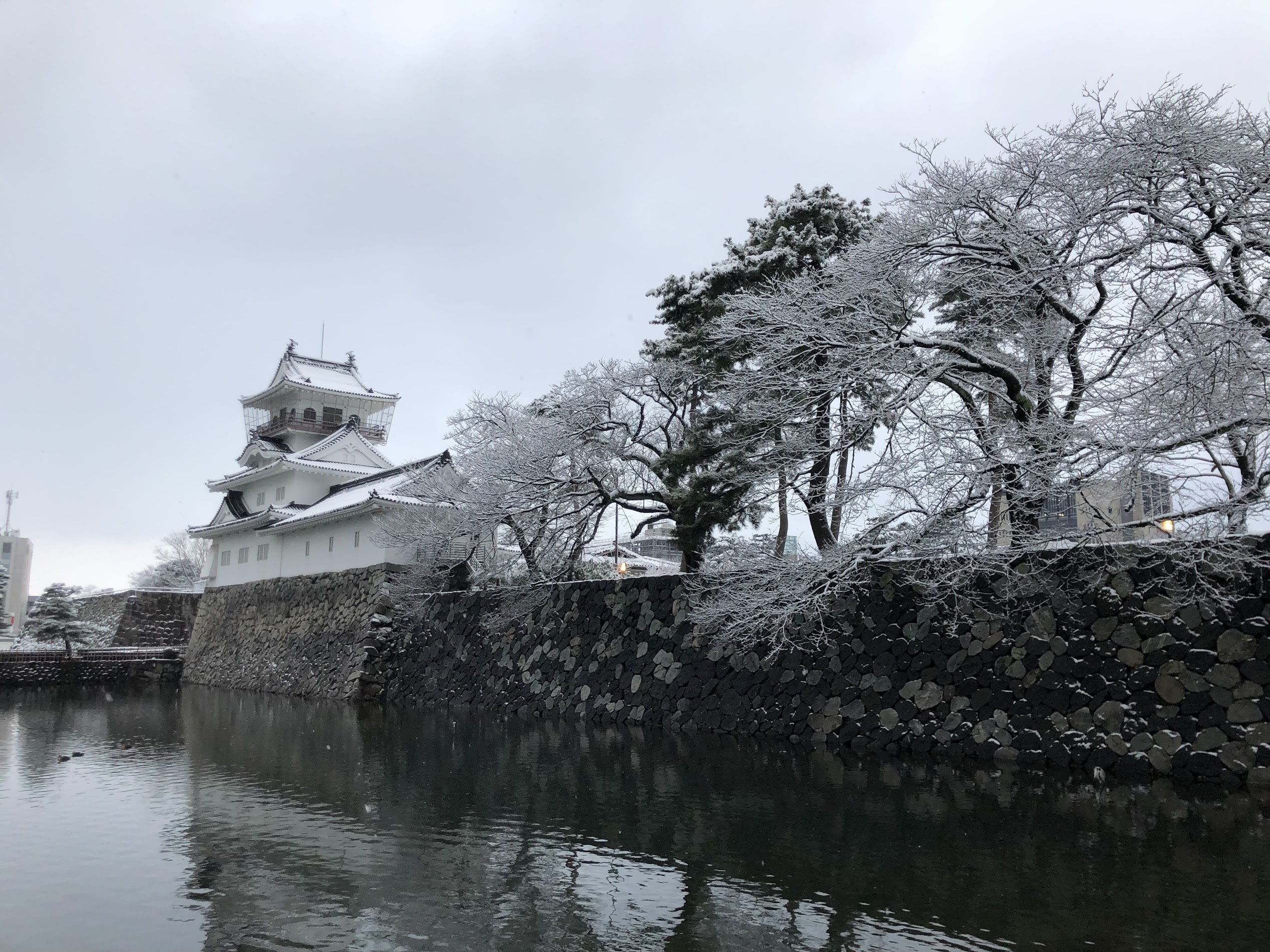
Toyama City is a working city, not a tourist one. The castle grounds are a public park used by locals on weekday lunches. The fish market at the port is active in the early morning and largely finished by the time tour groups arrive.
Takaoka, 30 minutes west on the local train, has the prefecure’s most concentrated historic area — the Zooji-ji Temple complex (a National Treasure), the Great Buddha standing in an open park with no admission charge, and a preserved merchant district called Kanaya-machi where the old dōzō storehouses now hold craft shops and cafés.
Yatsuo, 30 minutes southeast of Toyama City by bus, holds its annual Owara Kaze-no-Bon festival over three days in early September. Dancers in straw hats move through the streets at dusk and continue past midnight. It is not designed for tourists — there are no bleachers, no ticketed areas. Visitors line the lanes and watch. The atmosphere is specific in a way that festival photographs cannot convey.
Local Tips
For Tateyama, book transport in advance for late April The snow wall period (late April through early May) is the route’s most popular window. Cable cars and buses fill up. Reserve seats for the ropeway and the Tateyama–Murodo bus as early as possible. Arriving at Tateyama Station without a reservation during Golden Week means a long wait or no access at all.
Toyama Station has the best masu-zushi selection at 8 AM The bentō shops at Toyama Station are stocked fresh in the morning. By early afternoon the best options are gone. If you’re catching a morning Shinkansen west, buy breakfast at the station — it is genuinely the correct meal for that journey.
Skip Toyama City’s izakayas and go to the port The Shinminato fishing port, 30 minutes from Toyama Station by light rail, has restaurants that buy directly from the boats. The white shrimp sashimi here costs roughly half what the same dish runs in the station area, and the quality is noticeably different.
Practical Info
| Item | Detail |
|---|---|
| Shinkansen from Tokyo | ~2 hrs 10 min / ~¥14,000 (non-reserved) |
| Shinkansen from Kanazawa | 18 min / ~¥2,000 |
| Tateyama Kurobe Route | Open mid-April – mid-November |
| Snow wall season | Late April – late May |
| Tateyama cable car | ¥720 one way |
| Kurobe Gorge Railway | ¥1,980 one way (Unazuki→Keyakidaira) |
| Takaoka Daibutsu | Free admission, open grounds |
| Zuiryu-ji Temple | ¥500 admission |
| Best seasons | Late April (snow walls), September (Owara festival), November (foliage) |
| Base city | Toyama City — all major routes depart from the station |